The Weeknight Cooking System: Dinner Without the Daily Decision
The hard part of cooking is not the cooking. It is deciding, shopping and starting.

5 min read
—Not yet rated
The hard part of cooking is not the cooking. It is deciding, shopping and starting.
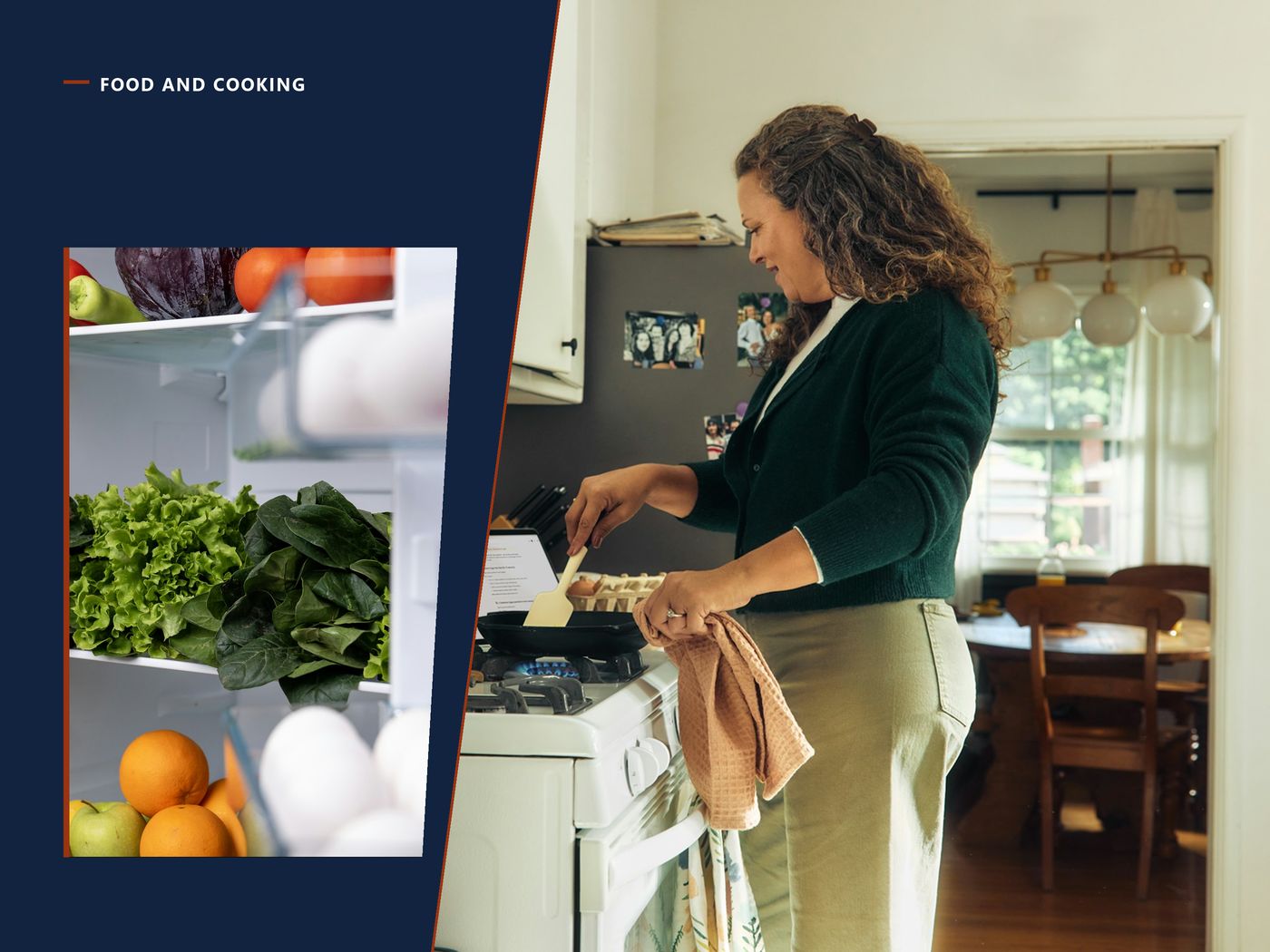
At about six o'clock on a Tuesday, a familiar thing happens in a great many kitchens. Someone opens the fridge, looks at a reasonable quantity of food, closes it again, and orders something.
It is rarely about skill. The person standing in front of that fridge usually knows how to cook several meals. What defeated them was being asked, at the end of a long day, to make a decision, check whether the ingredients exist, and start.
The answer is not more recipes. It is a system that removes the decision — and it is considerably simpler than meal prepping every Sunday.
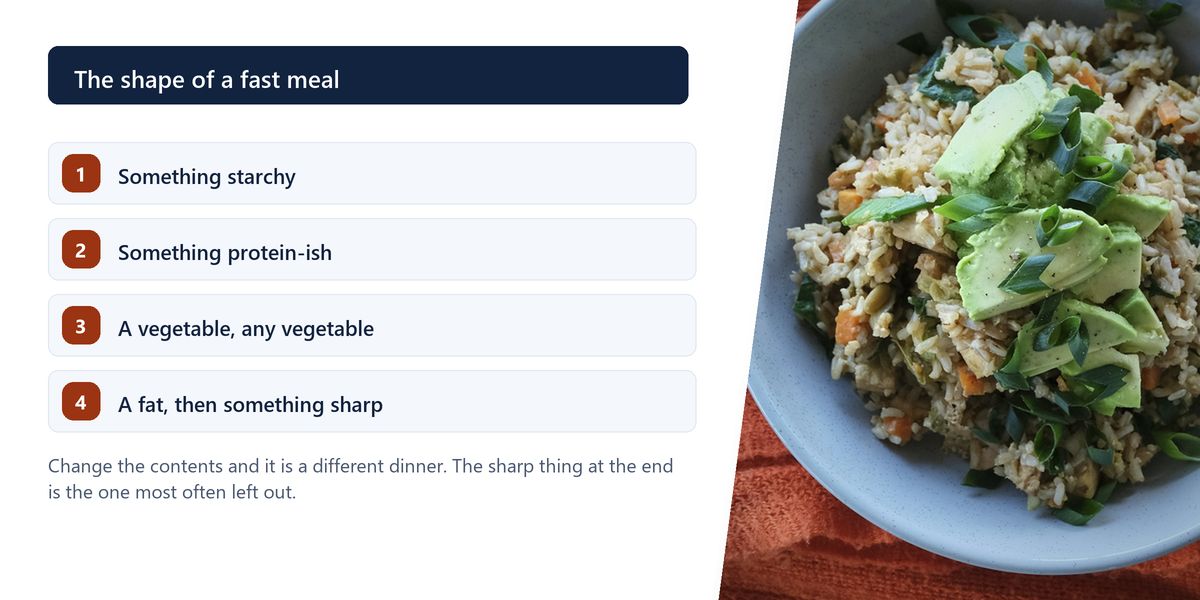
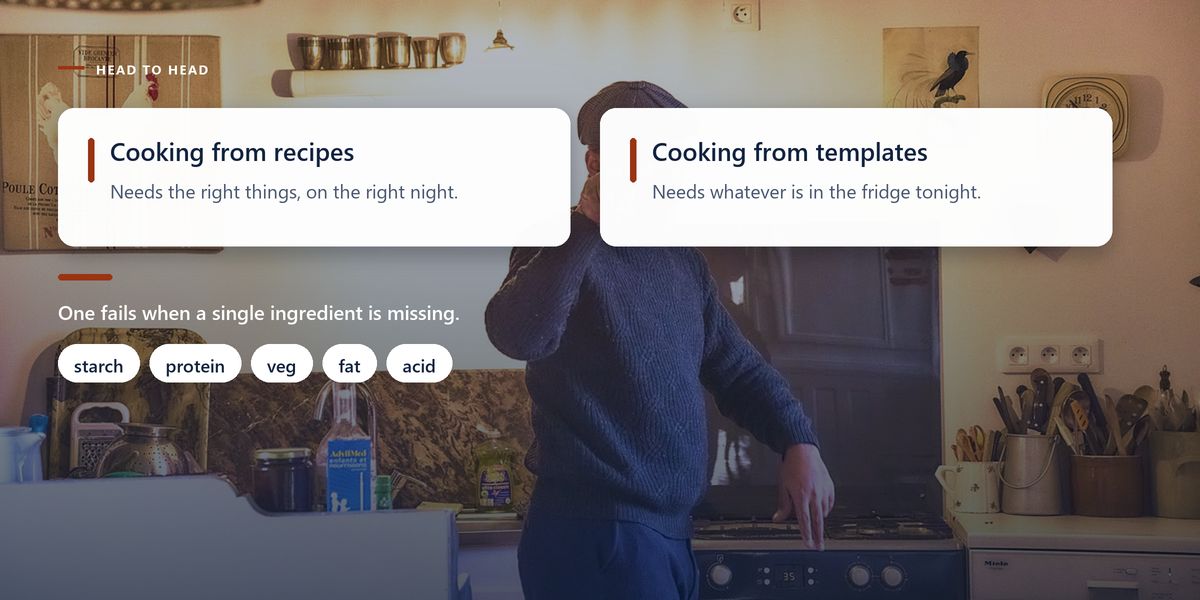
A recipe is a specific set of instructions requiring specific ingredients. A template is a shape you can fill with whatever you have, and it is far more useful on a weeknight.
Nearly every fast meal is the same structure: something starchy, something protein-ish, a vegetable, a sauce or fat, and something sharp or fresh at the end. Change the contents and you have a different dinner without learning anything new.
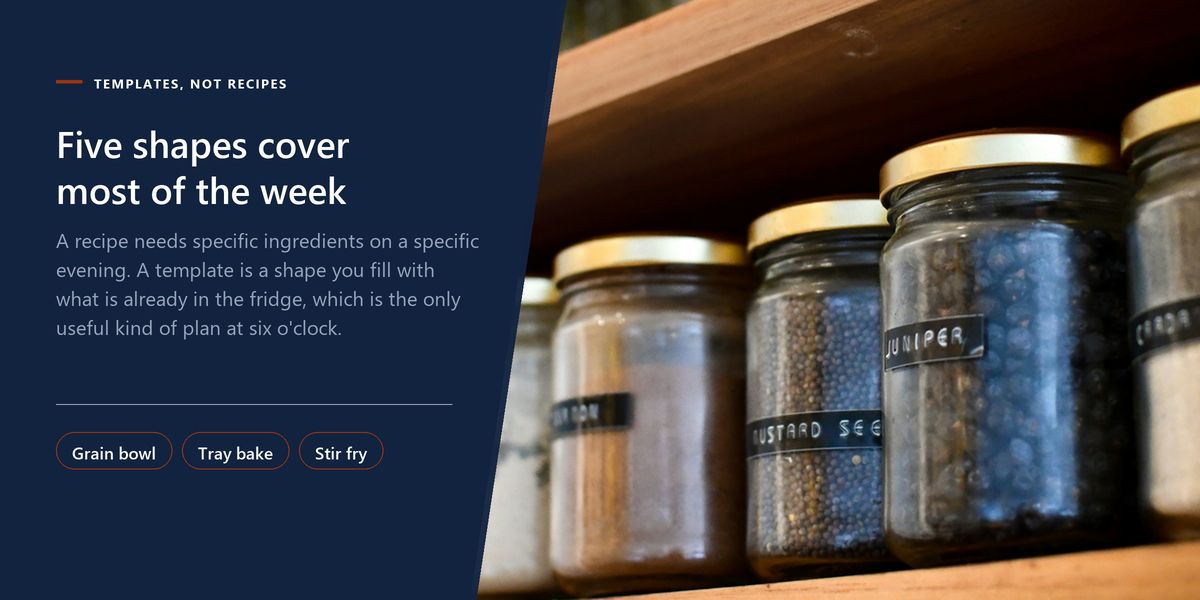
Five templates cover most weeknights indefinitely. You are not choosing a meal from thousands of possibilities; you are choosing one of five shapes and looking at what is in the fridge.
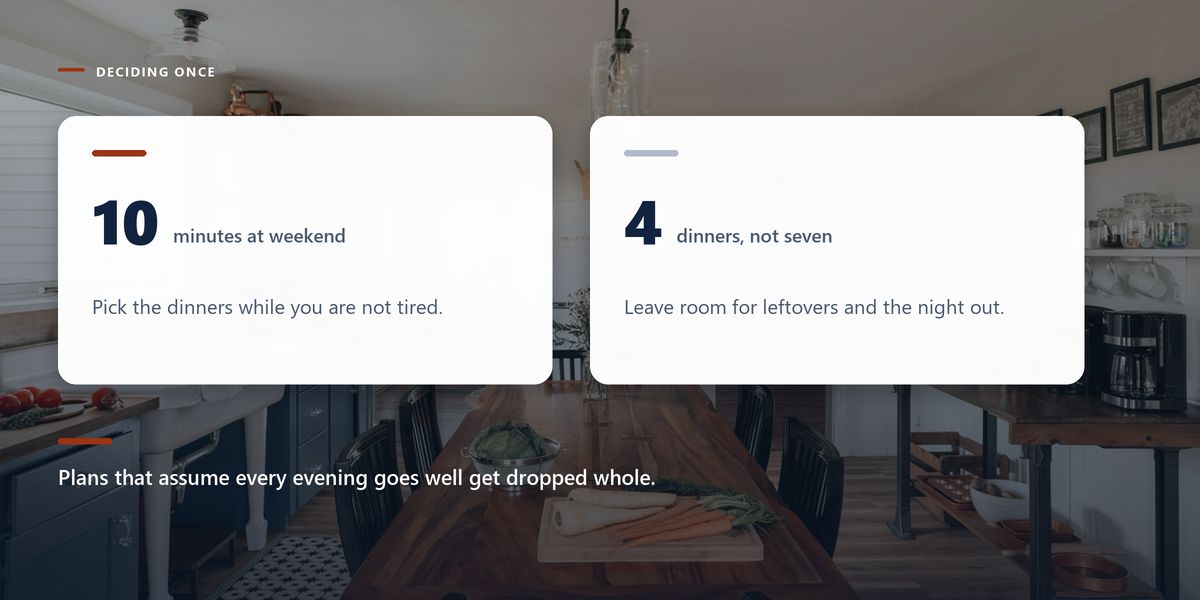
The decision fatigue is the actual enemy, so make the decision when you are not tired. Ten minutes at the weekend choosing four or five dinners removes the 6pm negotiation entirely for the rest of the week.
Crucially, do not plan seven. Plan four or five, and leave room for the evening that goes wrong, the leftovers, and the night someone eats out. Plans that assume perfect adherence get abandoned in full when one day deviates.
Repetition is also allowed, and underused. Most households happily eat roughly the same eight or ten dinners in rotation. Feeling obliged to cook something novel every night is a modern idea and a needlessly exhausting one.
The difference between a fridge that yields dinner and one that does not is usually not the main ingredients. It is whether the supporting cast is present.
| Category | What to keep | Why it matters |
|---|---|---|
| Fats | olive oil, butter, a neutral oil | the base of nearly every method |
| Acids | lemons, vinegars | the most common missing element |
| Aromatics | onions, garlic, ginger, chilli | turns ingredients into a dish |
| Salt and umami | good salt, soy, anchovy, parmesan, miso | depth without long cooking |
| Fast carbs | pasta, rice, couscous, tortillas, noodles | the base of a meal in minutes |
| Emergency protein | eggs, tinned beans, tinned fish, frozen peas | dinner when the plan collapses |
Keep the emergency shelf genuinely untouched for emergencies: a tin of chickpeas, a tin of tomatoes, pasta, eggs and something frozen. Knowing dinner exists no matter what removes most of the panic that leads to ordering in.
You need surprisingly few. Almost all quick cooking is a combination of four things, and getting each slightly right matters more than any recipe.
The cheapest time saving available is making more of something while you are already cooking it. Double the rice, roast a second tray of vegetables, cook extra chicken. None of it adds meaningful effort, and it converts a future evening into an assembly job.
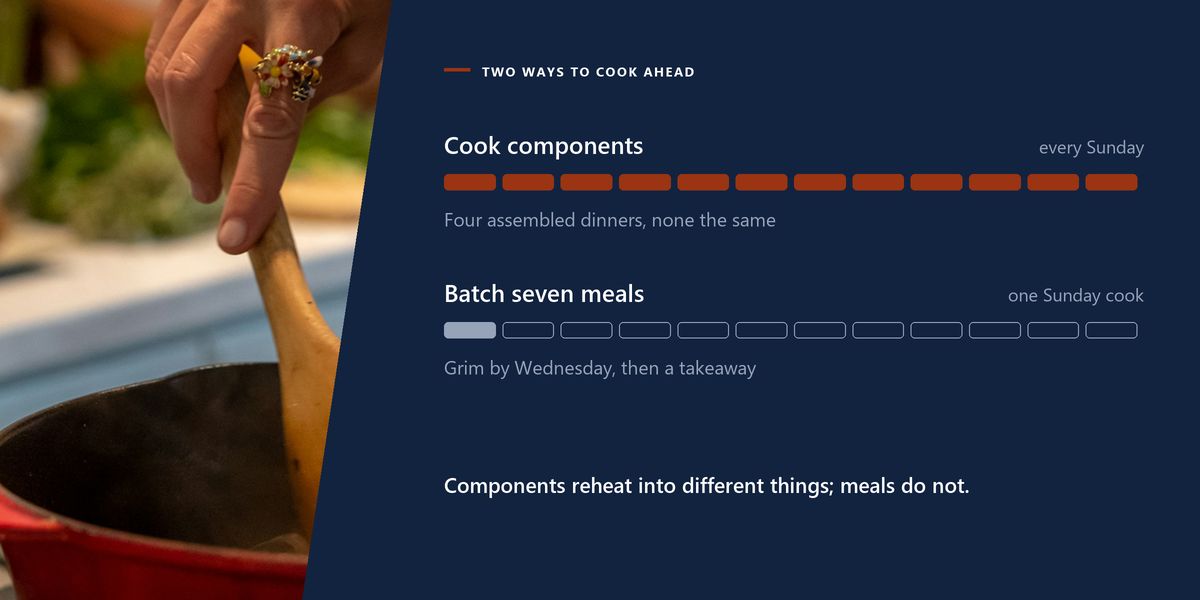
This is different from batch-cooking seven identical portions, which most people find grim by Wednesday. The aim is components rather than finished meals — cooked grains, roasted vegetables, a sauce — which can become several different dinners.
A couple who ordered takeaway three or four nights a week tried a single change: every Sunday they roasted a large tray of vegetables, cooked a pot of grains and made one jar of dressing. About forty minutes, mostly unattended.
Monday was a grain bowl. Tuesday the vegetables went into a frittata. Wednesday they became a pasta with the last of the dressing thinned with pasta water. Thursday was soup. Nothing was eaten twice in the same form.
Takeaway dropped to roughly once a fortnight, and the reason was not discipline. At six o'clock there was simply no decision left to make.
Ambitious meal plans fail for the same reason ambitious exercise plans do: they assume every evening goes as expected. Plan four dinners, not seven, and treat the gap as part of the design rather than as slippage.
Learn five templates instead of fifty recipes. Decide the week's meals once, planning four or five rather than seven. Stock fats, acids, aromatics and emergency proteins rather than specific meals. Get the pan hot, salt as you go, roast high, finish with acid, and deliberately cook extra.
Cooking on a weeknight is not really a culinary problem. It is a logistics problem wearing an apron, and it responds to the same things any logistics problem does: fewer decisions, better defaults, and a fallback when the plan fails.
Sort those out and the cooking itself turns out to be the easy part — and often the best twenty minutes of the day. If baking is the next thing you want to learn, start with our beginner's guide to bread.
Tap a star to share what you thought.
No ratings yet
Remove the decision rather than relying on willpower. Choose four or five dinners once at the weekend, keep a stocked base of fats, acids and aromatics, and maintain an emergency shelf so a meal always exists even when the plan collapses.
No. Batch-cooking identical portions works for some people and becomes tedious for many by mid-week. Preparing components instead — cooked grains, roasted vegetables, a dressing — gives you several different meals from one session of effort.
Olive oil, lemons and vinegar, onions and garlic, salt and something umami-rich such as soy or parmesan, a fast carbohydrate like pasta or rice, and emergency proteins such as eggs and tinned beans.
Most often it needs acid rather than more salt. If a dish tastes salty enough but somehow dull, a squeeze of lemon or a splash of vinegar at the end will usually lift it immediately.
Four or five, not seven. Leaving room for leftovers, eating out and the evening that goes wrong means one deviation does not collapse the whole plan, which is why over-ambitious plans get abandoned entirely.
Using a properly hot pan and giving food room. Most disappointing home cooking is pale rather than browned, because the pan was too cool or too crowded, and browning is where a great deal of flavour comes from.
Sign in to join the conversation.
Loading responses…
Have a story, idea, or something valuable to share? Join The Blog Story for free, publish your content, reach more readers, and earn a share of advertising revenue from eligible content.
Create quality content. Grow your audience. Grow your earning potential.