Renting Versus Buying a Home: The Comparison Most People Get Wrong
Rent is not money thrown away, and a mortgage payment is not the cost of owning.

6 min read

—Not yet rated
Rent is not money thrown away, and a mortgage payment is not the cost of owning.
The comparison almost everyone makes is rent against the monthly mortgage payment. If the mortgage is lower, buying wins; if not, it is close. It is intuitive, widely repeated and structurally wrong.
A mortgage payment contains two very different things: interest, which is a cost, and capital repayment, which is a transfer from your bank account into an asset you own. Comparing all of it to rent compares a cost to a cost plus a saving.
The honest comparison is between the money that disappears in each scenario. Once you set it up that way, the answer becomes clearer and considerably more personal.
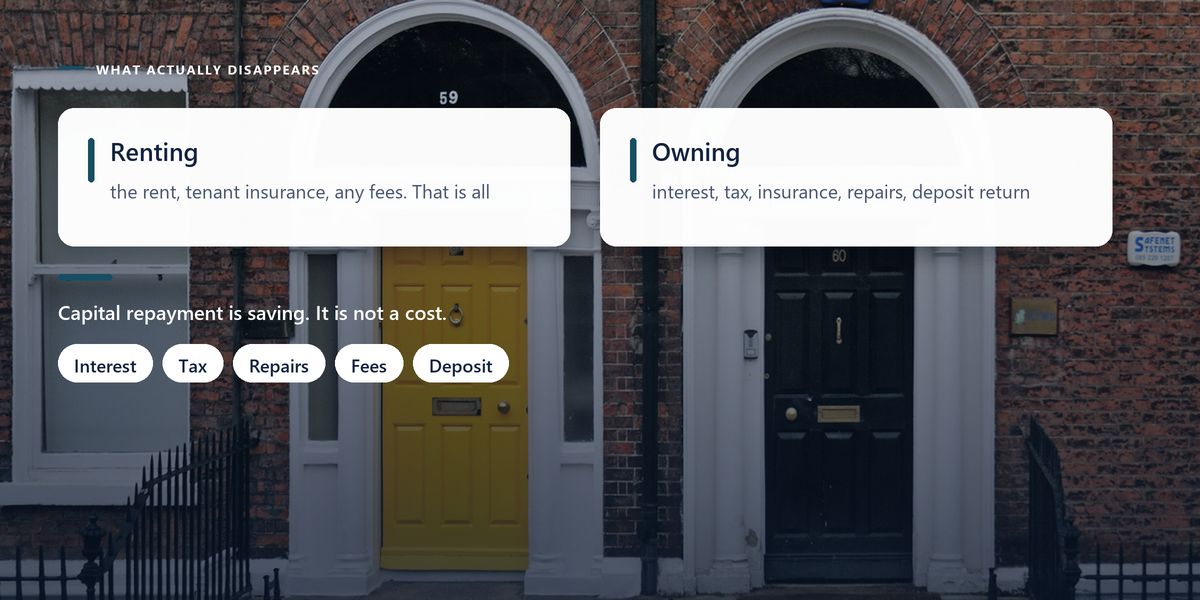
When renting, the unrecoverable cost is the rent, plus tenant insurance and any fees. That is it. It is fully visible and fully gone.
When owning, the unrecoverable costs are mortgage interest, property taxes, buildings insurance, maintenance, service charges or ground rent where applicable, and the opportunity cost of the deposit — the return that money could have earned elsewhere.
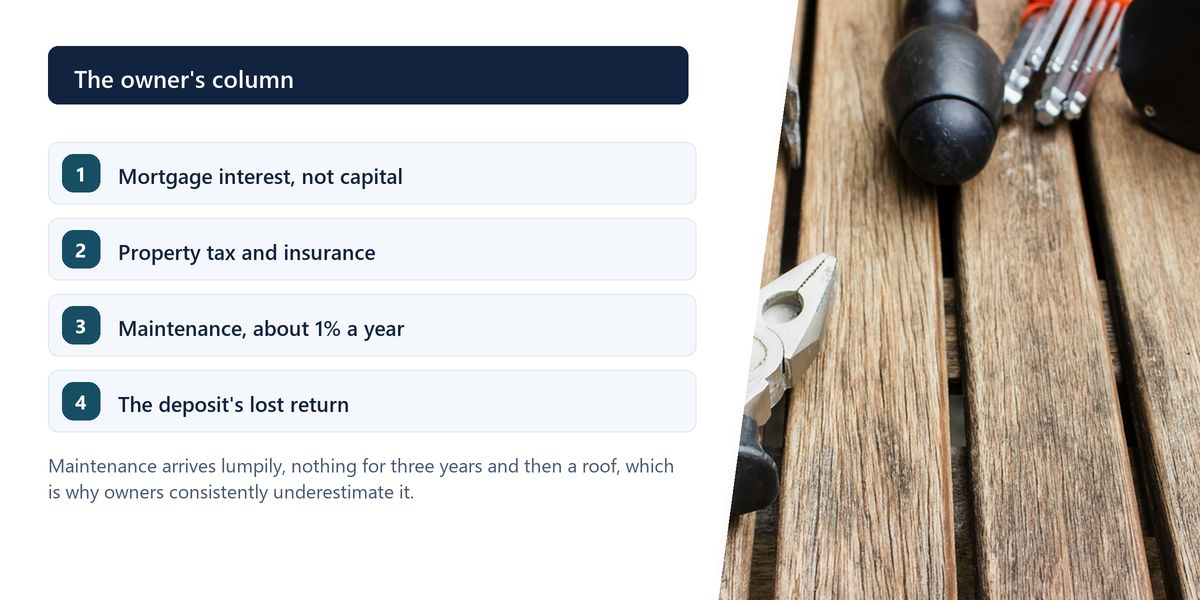
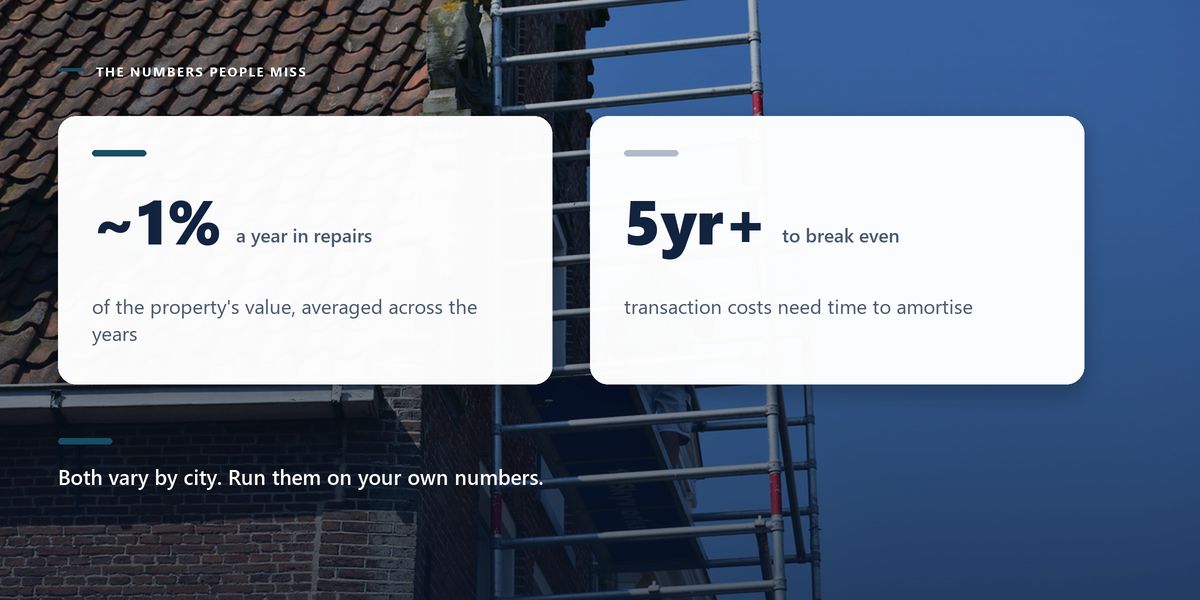
Maintenance is the one owners consistently underestimate. A commonly used planning figure is somewhere around 1% of the property's value per year, averaged over time. It arrives lumpily — nothing for three years, then a roof — which is why it feels smaller than it is.
Buying and selling a property is expensive in a way that renting is not. Legal fees, surveys, transfer taxes, mortgage arrangement fees and estate agent commission on the way out can easily consume a substantial percentage of the price across a purchase and sale.
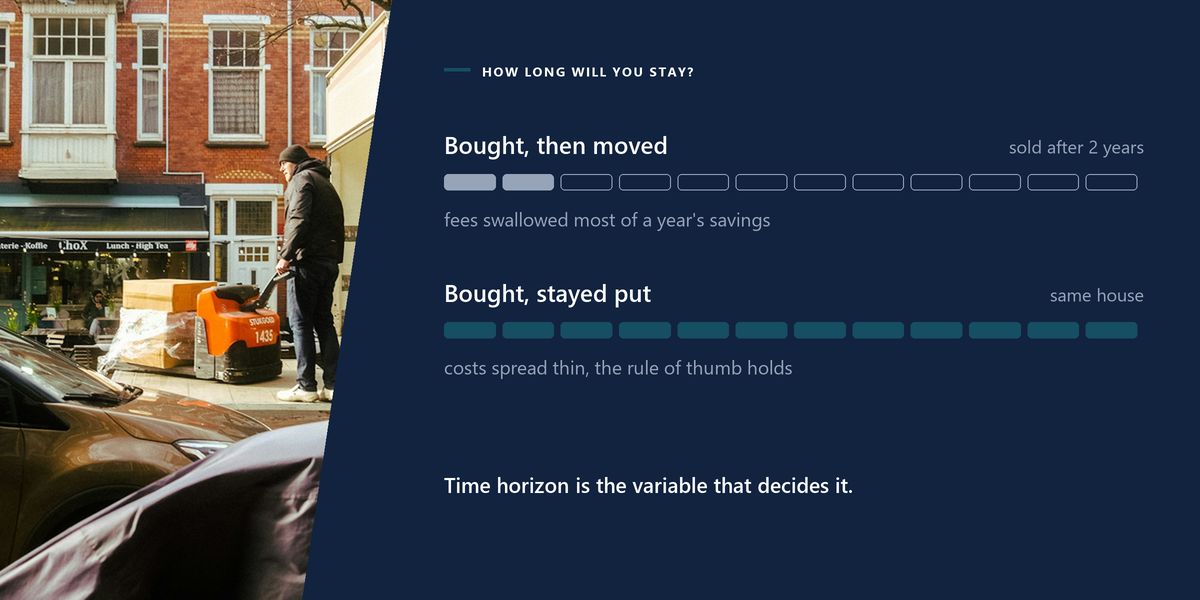
Those costs have to be spread across however long you own. Over twenty years they are trivial; over two they can outweigh any benefit entirely, even in a rising market.
This makes time horizon the single most decisive variable. A common rule of thumb is that buying tends to need at least five years to make sense, and longer where transaction taxes are high. If there is a realistic chance you will move within a few years — a job change, a relationship, a city you are unsure about — that uncertainty has genuine financial weight.
| Factor | Renting | Buying |
|---|---|---|
| Upfront cost | deposit, refundable | deposit plus substantial fees |
| Monthly unrecoverable | the whole rent | interest, tax, insurance, maintenance |
| Flexibility | high — notice period | low — months to sell |
| Maintenance risk | landlord's | yours entirely |
| Security of tenure | depends on the market and the law | high |
| Exposure to house prices | none | full, in both directions |
Do the calculation with your own numbers rather than accepting a general answer. Add up your annual rent, then add up interest plus property tax plus insurance plus estimated maintenance plus the return your deposit could otherwise earn. Compare those two totals. The result varies enormously between cities and moments, and the general advice you have heard was formed somewhere that may look nothing like where you live.
Rent buys housing for a period, in the same way that mortgage interest does. Neither builds equity. The difference is which unrecoverable amount is larger, and in some markets and moments that is rent, in others it is the ownership costs.
Property prices have risen substantially over long periods in many countries, and they have also fallen for a decade at a time in specific markets. Anyone who bought at a peak and had to sell within a few years can attest that the long-run average was not much comfort.
Often true, once the mortgage is repaid and if you stay put — which is a meaningful conditional. The maintenance, tax and insurance costs continue for life, and a paid-off house is not a free house.
It is a mistake to treat the non-financial side as sentiment layered on top of a real calculation. For most people it dominates the decision, and legitimately so.

Two friends lived in the same city, earned similar amounts and reached the same conclusion from opposite directions.
One took a job with a two-year contract and no certainty of what came next. She rented, invested her would-be deposit, and moved abroad eighteen months later. Buying would have cost her most of a year's savings in transaction fees alone.
The other had settled work, a partner and a child starting school in the area. He bought, accepted a monthly cost slightly above his rent, and valued not being asked to move at eight weeks' notice.
Neither made a mistake. The variable that decided it was not the market — it was how confident each was about the next five years.
Property taxes, stamp duties, tenant protections, mortgage products and tax treatment of housing vary enormously between countries and even between regions. Any general rule — including the five-year one — needs checking against local numbers before you rely on it, and a mortgage adviser or accountant is worth the fee for a decision this size.
Compare unrecoverable costs rather than rent against a full mortgage payment. Include maintenance, tax, insurance and the opportunity cost of the deposit. Account for transaction costs against your realistic time horizon. Stress-test affordability, then weigh security, control and flexibility explicitly.
There is no universal answer, which is inconvenient for anyone hoping an article will settle it. There is a correct method, and running it with your own numbers takes about an hour.
Do that before absorbing anyone's confident opinion, including a relative's. Their answer was correct for a different city in a different decade. Whichever you choose, make sure the emergency fund exists first — ownership makes that more important, not less.
Tap a star to share what you thought.
No ratings yet
No more than mortgage interest is. Both buy housing for a period without building equity. The meaningful comparison is between the unrecoverable costs on each side — rent versus interest, tax, insurance, maintenance and the opportunity cost of your deposit.
Commonly at least five years, and longer where transaction taxes are high, because purchase and sale costs need time to amortise. If there is a realistic chance you will move sooner, that uncertainty carries genuine financial weight.
Maintenance above all — a common planning figure is around 1% of the property's value per year, arriving unevenly. Transaction costs, property taxes, buildings insurance and service charges are also routinely left out of the mental calculation.
Not reliably over any given period. Prices have risen substantially over long spans in many countries and have also stagnated or fallen for a decade in particular markets. Long-run averages offer little comfort to someone who must sell during a downturn.
Not directly. Part of a repayment mortgage is interest, which is a cost, and part is capital repayment, which is money moving into an asset you own. Only the interest portion belongs alongside rent in an honest comparison.
Security of tenure, control over the property, flexibility to move, and who is responsible for maintenance. These are not tie-breakers layered onto a real calculation — for most people they legitimately dominate the decision.
Sign in to join the conversation.
Loading responses…
Have a story, idea, or something valuable to share? Join The Blog Story for free, publish your content, reach more readers, and earn a share of advertising revenue from eligible content.
Create quality content. Grow your audience. Grow your earning potential.