Recycling Myths and What Actually Reduces Waste
Recycling is the third priority, not the first — and hopeful recycling makes things worse.

6 min read
—Not yet rated
Recycling is the third priority, not the first — and hopeful recycling makes things worse.
Recycling occupies an outsized place in how people think about waste, partly because it is the visible part. You handle it weekly, it involves sorting, and it produces a satisfying sense of having done something.
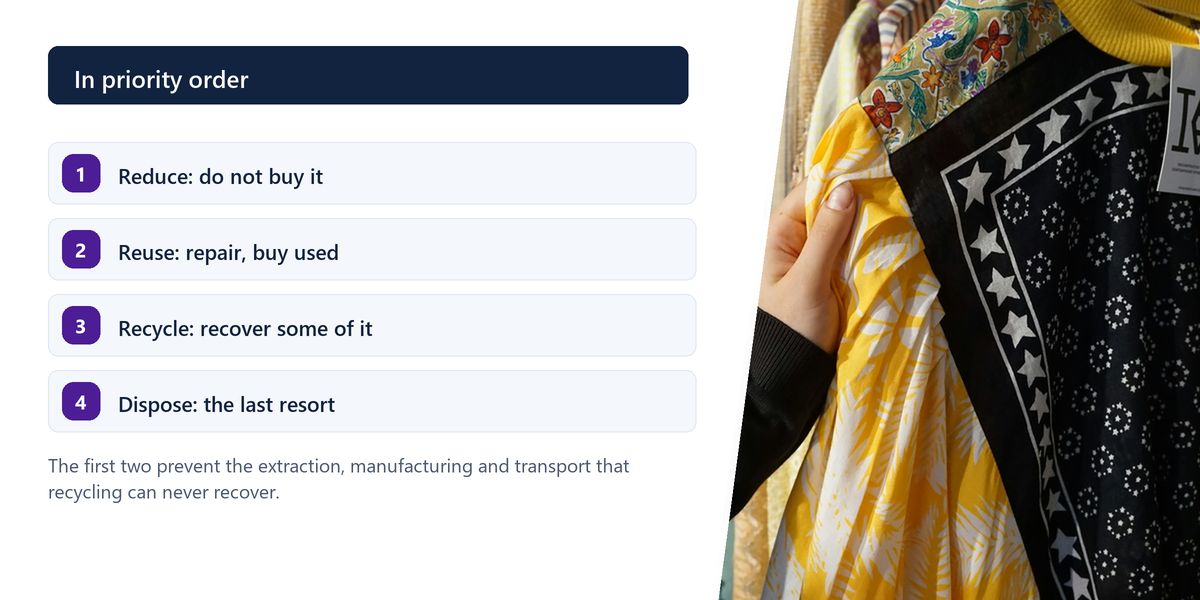
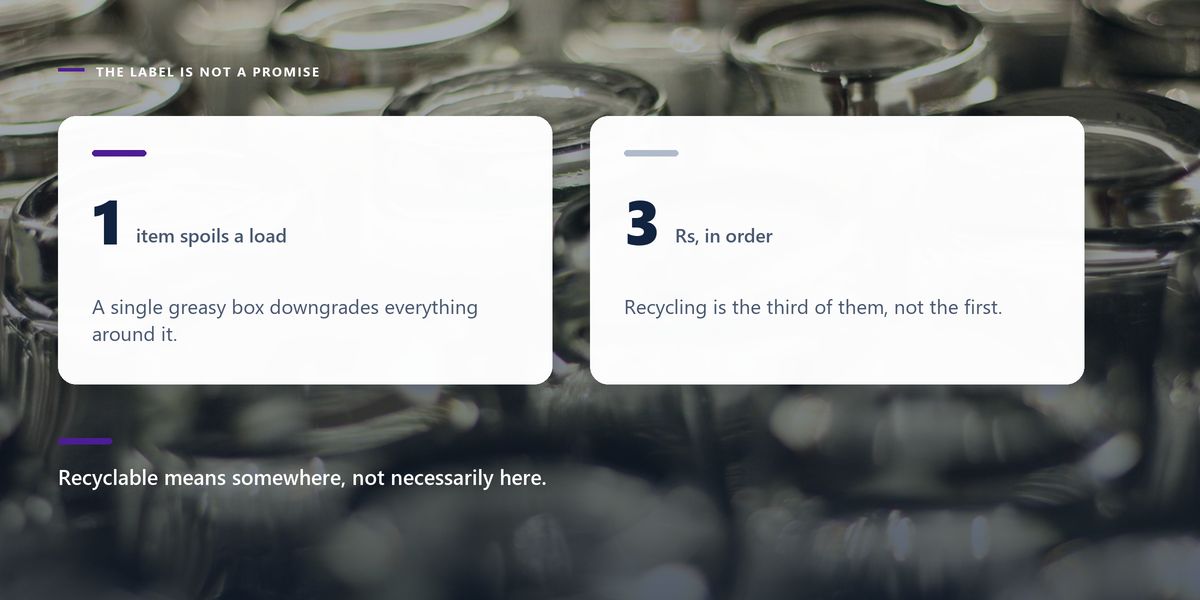
It is also the least effective of the three Rs, which are in priority order for a reason: reduce, then reuse, then recycle. Recycling is what you do with the material you could not avoid using.
None of which means recycling badly. Doing it wrong actively causes harm, and a surprising amount of well-intentioned recycling does exactly that.
Putting something in the recycling because you hope it can be recycled is common, understandable and counterproductive. It has a name — wishcycling — and it creates two problems.
The first is contamination. Certain materials can render an entire batch unsuitable for processing, meaning genuinely recyclable material is sent to landfill or incineration along with the contaminant. A greasy pizza box or a partly full jar can affect far more than itself.
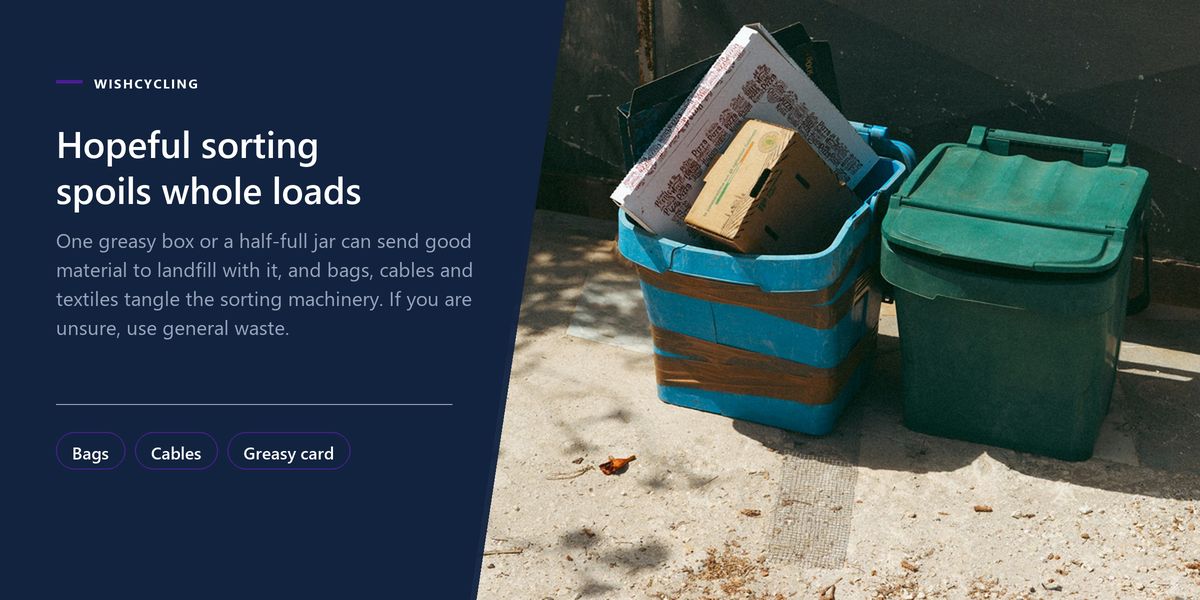
The second is equipment. Items like plastic bags, textiles, cables and hoses tangle in sorting machinery, causing shutdowns for manual removal. They are among the most common causes of stoppages at sorting facilities.
The rule is uncomfortable and correct: if you are unsure and cannot check, it belongs in general waste. Wishful recycling is worse than no recycling.
The triangular arrows symbol on plastic packaging, usually with a number inside, identifies the type of plastic resin. It is a material identification code, not a promise that the item is collected or recycled where you live.
In practice, some plastic types are widely collected and others are almost never recycled at scale despite carrying the symbol. Which is which depends entirely on your local authority or waste provider, and it changes over time as facilities and markets change.
This is why checking your specific local guidance matters more than any general article, including this one. Most councils and waste companies publish a searchable list, and five minutes with it is more useful than years of assumption.
| Item | Common assumption | Usual reality |
|---|---|---|
| Greasy pizza box | cardboard, so recyclable | grease contaminates; tear off clean parts |
| Plastic bags and film | goes in the bin with plastics | tangles machinery; usually needs store drop-off |
| Coffee cups | paper | plastic-lined; usually needs special collection |
| Shredded paper | paper, so fine | fibres too short; often rejected |
| Broken glassware and Pyrex | glass is glass | different melting point; contaminates glass |
| Aerosols | metal | varies locally; must be completely empty |
| Batteries and electronics | small, so general waste | hazardous; require separate collection and cause fires |
Rinse containers before recycling, but only enough to remove food residue — a quick swill in used washing-up water is sufficient and does not waste clean water. Residue is one of the leading causes of otherwise good material being rejected, and it also makes collection unpleasant for the people handling it.
The environmental cost of a product is largely determined before you ever hold it — in extraction, manufacturing and transport. Recycling recovers some material value, and it does not recover that upfront investment.
Which is why not buying something, or using an existing thing for longer, outperforms recycling it by a wide margin. A reusable bottle used for years replaces hundreds of single-use ones; a bottle recycled diligently still required manufacturing each time.
This also reframes the most impactful household decisions, which tend not to be about bins at all.
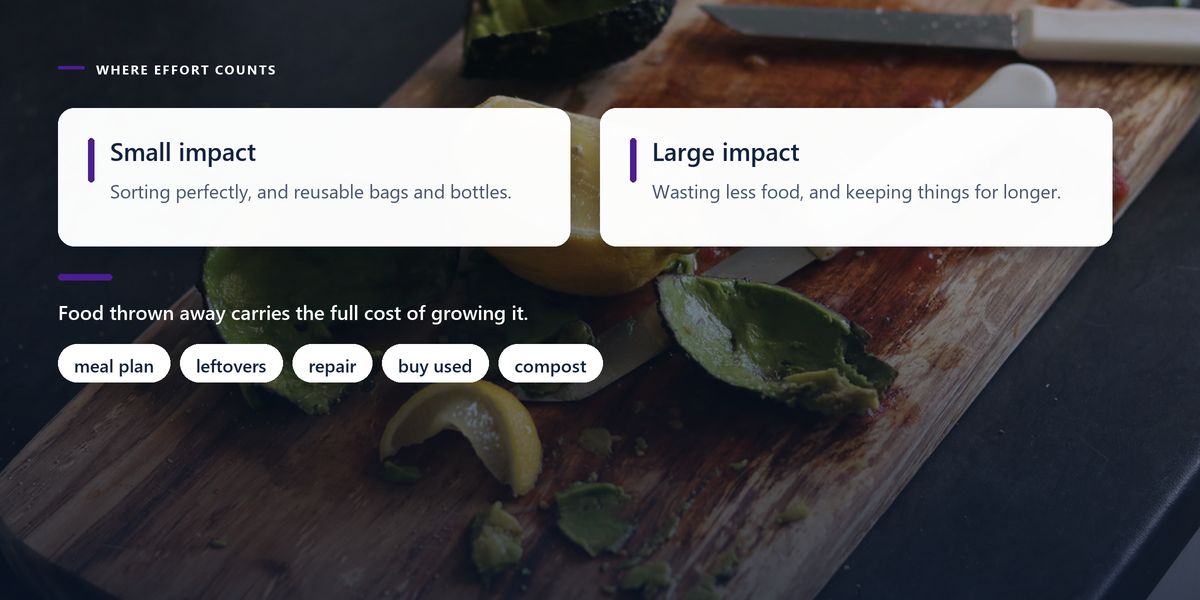
Food waste sent to landfill decomposes without oxygen and produces methane, a considerably more potent greenhouse gas than carbon dioxide over the short term. That makes food waste unusually damaging relative to its volume.
Where a council food waste collection exists, using it properly is one of the simplest high-impact actions in a household. Where it does not, home composting handles fruit, vegetables, garden material and cardboard well, though not cooked food and meat in most systems.
The larger win, though, is not generating it. Meal planning, storing food correctly and taking leftovers seriously reduces both the environmental cost and the grocery bill, which is an unusually aligned pair of incentives.
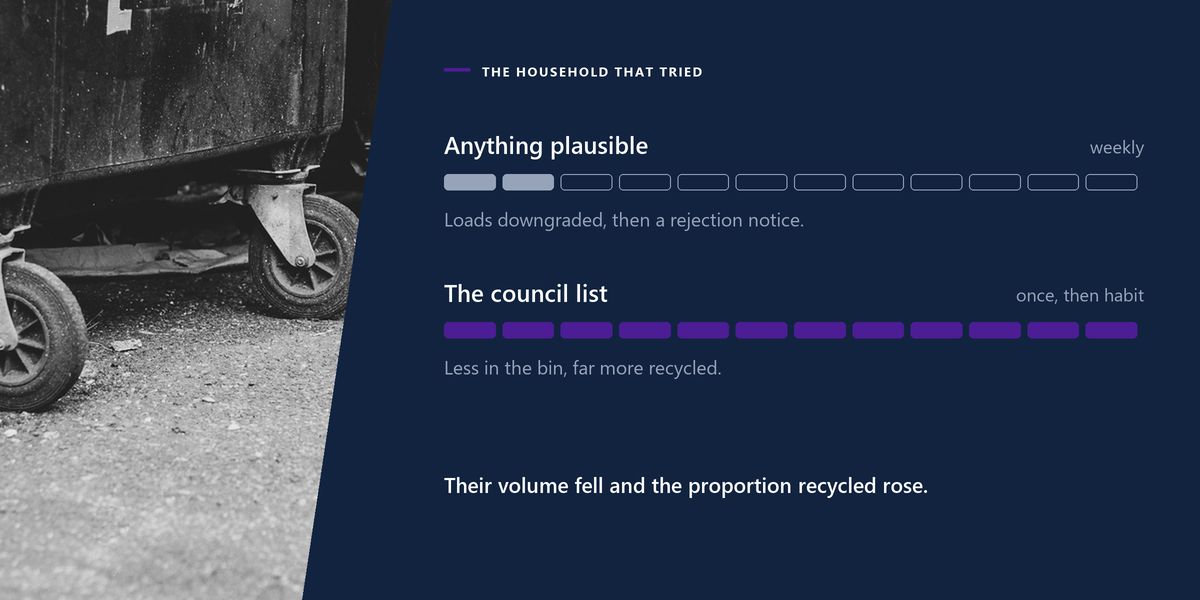
A family took recycling seriously, filling their recycling bin each week and putting anything plausible into it — food-stained containers, plastic film, a broken toaster, shredded paper.
Their local authority sent a rejection notice after several loads were downgraded due to contamination. Their conscientiousness had been actively counterproductive.
They spent twenty minutes with the council's online list and changed three habits: rinsing containers, keeping film and bags for supermarket collection, and treating electronics and batteries as separate hazardous items. Their recycling volume dropped, and the proportion actually recycled rose sharply.
Never put batteries, vapes or anything containing a lithium battery in household bins or recycling. They are a leading cause of fires in collection vehicles and waste facilities, causing serious injuries and significant damage every year. They require separate collection, and most supermarkets and recycling centres accept them.
Packaging language is often designed to reassure rather than inform. Recyclable means it can be recycled somewhere, not that it will be where you live. Biodegradable may require industrial composting conditions that no household or municipal system provides. Made with recycled content may describe a very small proportion.
The most reliable signals are specific and verifiable: a stated percentage of recycled content, a recognised certification, or clear instructions naming the local stream it belongs in.
Reduce first, reuse second, recycle third. Check local rules rather than assuming, since collection varies widely. Rinse containers and never wishcycle — general waste is better than contaminating a load. Keep bags, film, batteries and electronics out of household recycling. And focus most effort on food waste and buying less.
Recycling well is worth doing and it is the smallest of the three levers. The bin is where you handle the consequences of decisions already made in a shop.
Spend five minutes learning your local rules, then spend the rest of the effort further upstream. That is where the difference actually is. Our guide to cutting home energy use covers the other half of a household's footprint.
Tap a star to share what you thought.
No ratings yet
Putting something in the recycling in the hope it can be processed. It causes contamination that can send an entire load to landfill, and items like bags and cables jam sorting machinery. If you are unsure and cannot check, general waste is the better choice.
No. The triangular symbol with a number identifies the type of plastic resin, not whether your local service collects it. Whether something is genuinely recycled depends on local facilities, which is why checking council guidance matters more than the packaging.
Yes, enough to remove food residue. Contamination from leftover food is a leading cause of otherwise recyclable material being rejected. A quick rinse in used washing-up water is sufficient — there is no need to use clean water.
Grease and food residue soak into the cardboard fibres and contaminate the paper recycling process. Tear off and recycle the clean parts of the box and put the greasy sections in general waste or food waste composting if available.
Reduce food waste and keep products in use longer. Both avoid the environmental cost of production entirely, which is far larger than the value recovered by recycling the same item after a short life.
Never in household bins or recycling. Lithium batteries are a leading cause of fires in collection vehicles and waste facilities. Most supermarkets and household recycling centres offer dedicated collection points for batteries and small electricals.
Sign in to join the conversation.
Loading responses…
Have a story, idea, or something valuable to share? Join The Blog Story for free, publish your content, reach more readers, and earn a share of advertising revenue from eligible content.
Create quality content. Grow your audience. Grow your earning potential.