Making a Garden That Birds Actually Visit
Food brings them briefly. Water, cover and safety are what make them stay.

6 min read
—Not yet rated
Food brings them briefly. Water, cover and safety are what make them stay.
The usual approach is to hang a feeder, watch a few birds arrive, and conclude after a fortnight that the garden is now a wildlife haven.
Feeders do work, and they attract a narrow set of species doing one thing. A garden that genuinely supports birds — where they feed, drink, shelter, nest and raise young — needs three more things, and none of them costs much.
Here is what actually makes the difference, roughly in order of how underrated each one is.
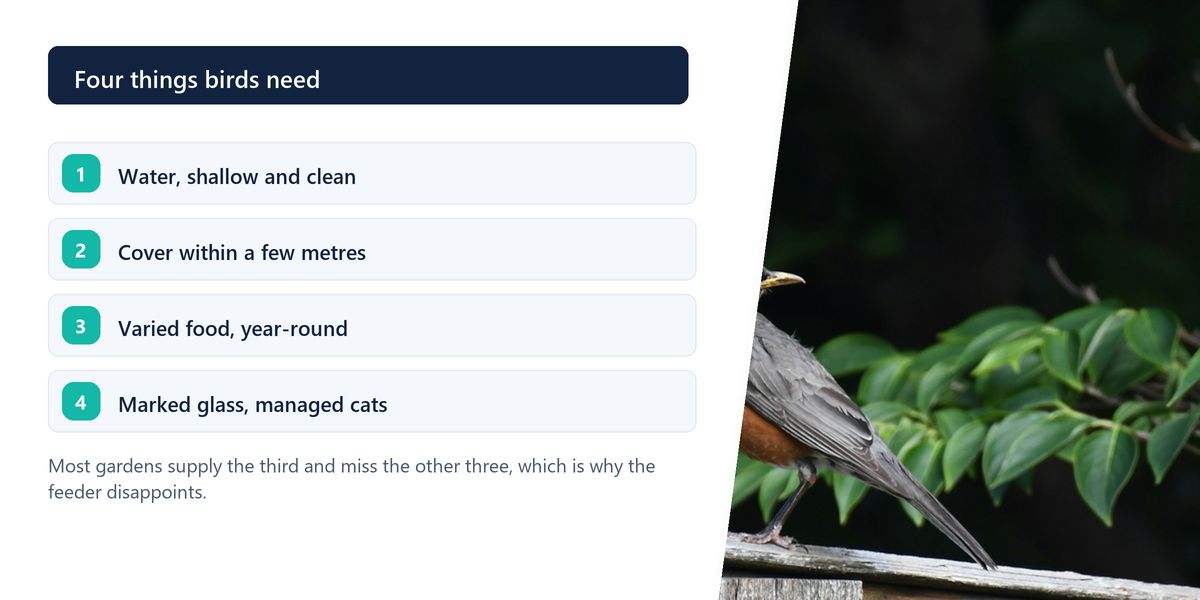
Birds need water for drinking and, crucially, for bathing — clean feathers are essential for insulation and flight, and a bathing bird is maintaining equipment rather than enjoying itself.
Water is also scarce in a way food often is not, particularly during summer dry spells and winter freezes. A garden with reliable water frequently attracts more species than one with the most elaborate feeding station.
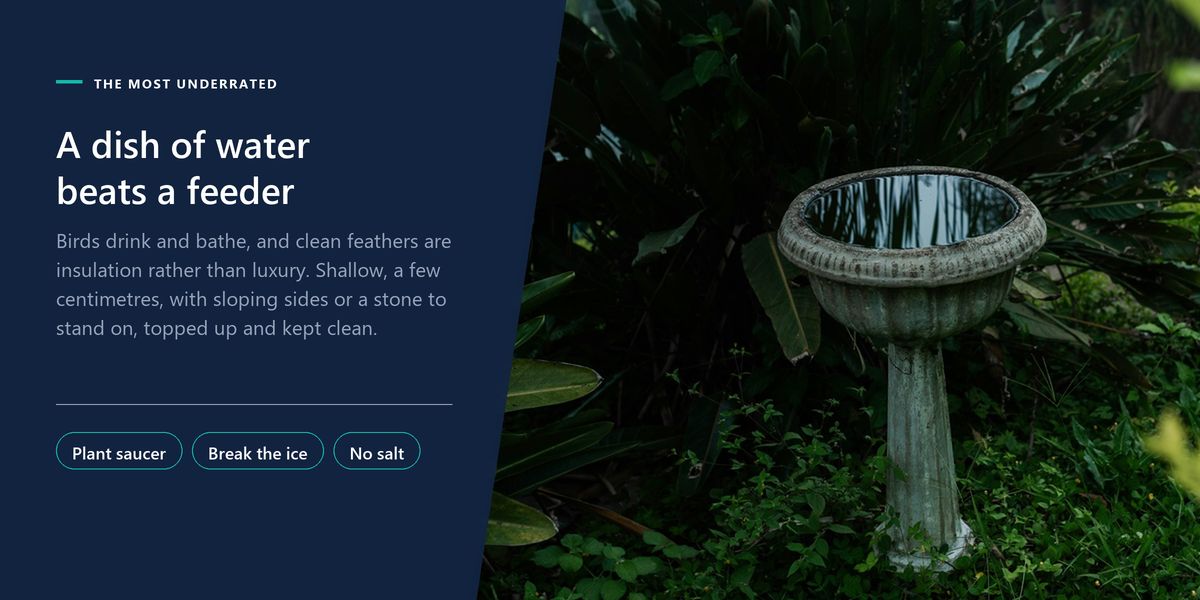
The requirements are modest: shallow, with sloping sides or a stone in the middle so smaller birds can stand, no more than a few centimetres deep, and topped up regularly. A plant saucer on the ground works perfectly well. Keep it clean, and in winter break any ice rather than adding chemicals or salt, which are harmful.
A feeder in the middle of an open lawn will be visited nervously and briefly. Birds are prey animals, and they want an escape route within a couple of seconds of any position they occupy.
Place feeders within a few metres of a shrub, hedge or tree so birds can approach in stages and retreat instantly. Too close and cats have cover to ambush from; a few metres is generally the useful compromise.
More broadly, dense native shrubs and an untidy corner do more for birds than any feeder. Hedges provide nesting sites, shelter from weather, and the insects that most garden birds actually depend on — particularly when feeding young.
Different foods attract different species, which is the simplest way to broaden what visits.
| Food | Attracts | Notes |
|---|---|---|
| Sunflower hearts | a wide range, very popular | no husks, so less mess below |
| Nyjer seed | finches | needs a specialist fine-ported feeder |
| Peanuts | tits, woodpeckers, finches | in a mesh feeder only, never loose in spring |
| Fat balls and suet | tits, starlings, wrens | remove any plastic netting first |
| Mealworms | robins, blackbirds, thrushes | especially valuable in the breeding season |
| Windfall fruit | thrushes, blackbirds | leave apples on the ground in winter |
Feed year-round rather than only in winter. Spring and early summer are demanding periods when adults are raising young, and autumn matters for building reserves. Do avoid whole peanuts and large hard items in the nesting season, since they can choke chicks — mesh feeders prevent this by forcing birds to take small pieces.
Clean feeders every week or two with hot water and a brush, and rinse thoroughly. Feeding stations concentrate birds in a way nature does not, which makes them efficient places to transmit disease. Move feeders occasionally too, so droppings do not accumulate in one spot beneath them.
Collisions with glass kill a very large number of birds, because reflections of sky and vegetation appear to be open space. The problem is worst on large windows facing gardens.
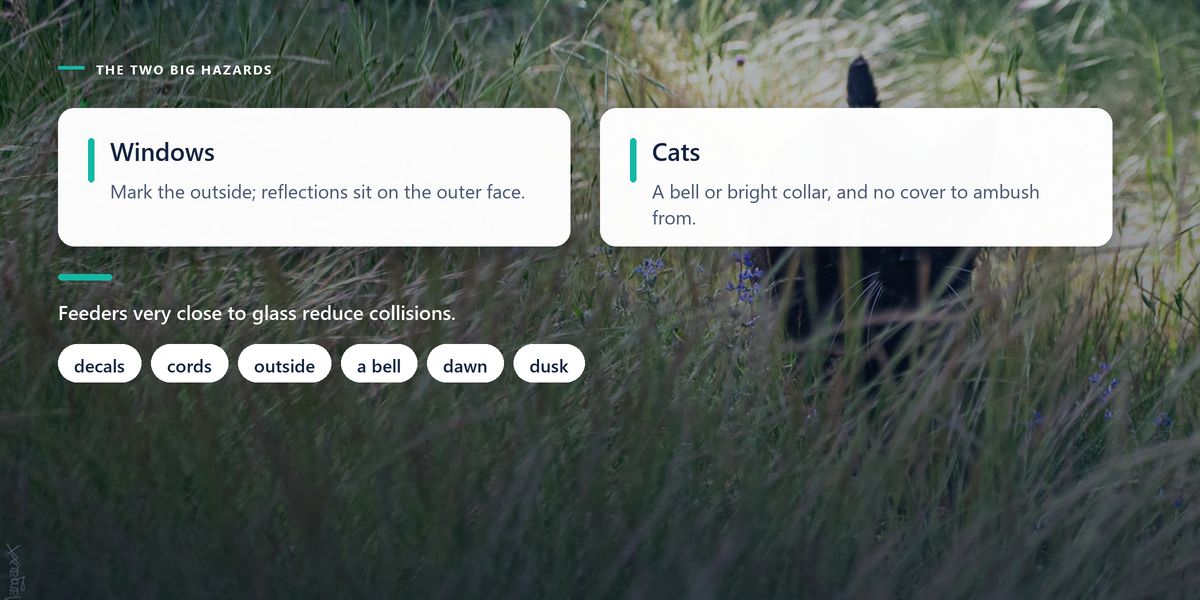
The effective fix is markings on the outside of the glass, spaced closely enough that birds do not attempt to fly between them — decals, cords, or specialist films. Markings on the inside are far less effective, since the reflection is on the outer surface.
Feeder placement helps too. Counter-intuitively, feeders very close to a window (under about half a metre) reduce fatalities, because birds cannot build up speed before hitting the glass.
Cats are effective predators of garden birds, and the mitigations are straightforward: a collar with a bell or a bright collar cover, keeping cats indoors around dawn and dusk when birds feed most actively, and placing feeders and water where there is no cover for an ambush within a couple of metres.
Prickly shrubs beneath feeders, or a low fence around a bird bath, both reduce the risk considerably without affecting the birds.
The single most important thing for garden birds is not seed. It is invertebrates, because almost all garden birds feed insects and caterpillars to their chicks even when the adults eat seed.
That means a garden supporting insects supports birds structurally rather than supplementarily. Native trees and shrubs, flowering plants across a long season, a patch of long grass, a log pile, fallen leaves left in a corner and no pesticide use all contribute.
The tidiest gardens are frequently the emptiest. Leaving part of a garden deliberately unmanaged is the cheapest, most effective wildlife measure available, and it is less work rather than more.
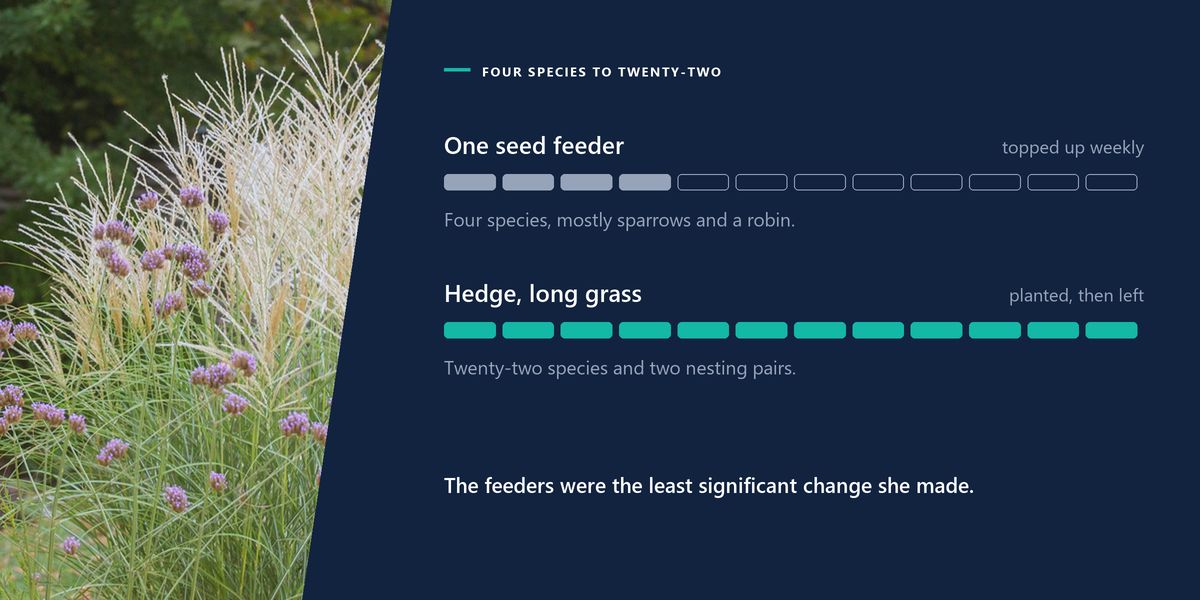
A suburban gardener had a single seed feeder and counted four species over a winter — mostly house sparrows and a robin.
Over two years she added a shallow water dish kept topped up and ice-free, planted a native hedge along one boundary, left a two-metre strip of grass uncut, stopped using slug pellets, and added a second feeder with sunflower hearts near the new hedge.
Her count reached twenty-two species, including finches, thrushes and two nesting pairs. The feeders were the least significant change; the hedge and the unmown strip did most of the work.
Stop feeding and clean everything thoroughly if you see sick birds — fluffed up, lethargic, or with signs of respiratory difficulty. Diseases such as trichomonosis spread readily at feeding stations, and pausing feeding for a few weeks disperses birds and interrupts transmission. Report unusual mortality to a local wildlife organisation if there is a scheme for it.
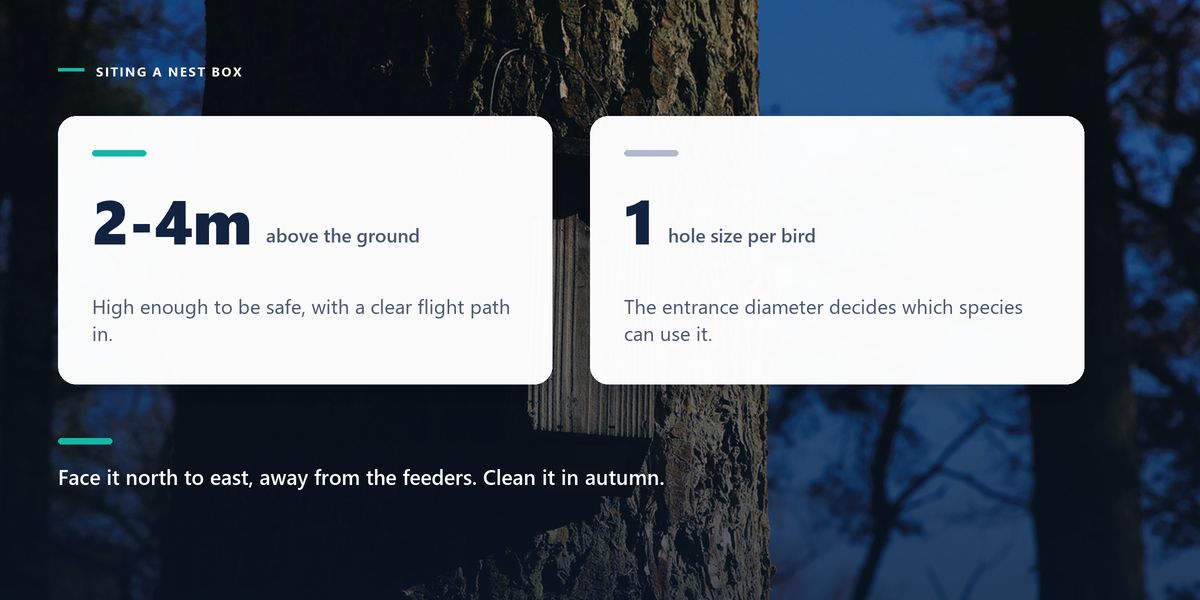
Nest boxes are genuinely valuable where natural cavities are scarce, which is most modern gardens. The details matter more than the box: entrance hole size determines which species can use it, and different species need different diameters.
Site boxes between two and four metres up, facing somewhere between north and east to avoid the strongest sun and prevailing rain, away from feeders — birds do not want a crowd outside the nest — and with a clear flight path in. Clean them out in autumn once the season has finished.
Provide water in a shallow, clean dish and keep it available all year. Place feeders near cover but not against it. Feed year-round with a variety of foods and clean feeders regularly. Plant native shrubs and leave part of the garden unmanaged for insects. Mark windows on the outside and manage cat access.
The gardens that fill with birds are not the ones with the most equipment. They are the ones with water, cover, insects and somewhere safe to nest — most of which is achieved by planting a hedge and leaving a corner alone.
Start with a shallow dish of water. It is free, takes a minute, and is the change most likely to surprise you within a fortnight. For growing things in a smaller space, see our guide to small-space gardening.
Tap a star to share what you thought.
No ratings yet
Water, more often than food. A shallow, clean dish for drinking and bathing is scarce in many gardens and frequently attracts a wider range of species than a feeding station, particularly during dry spells and freezing weather.
Within a few metres of a shrub, hedge or tree so birds have an escape route, but not directly against dense cover where cats can ambush from close range. Feeders in the middle of open lawns are visited briefly and nervously.
All year. Spring and early summer are demanding periods when adults are raising young, and autumn matters for building reserves. Avoid whole peanuts and large hard items during the nesting season, since they present a choking risk to chicks.
Every week or two with hot water and a brush, rinsed thoroughly, and move feeders around occasionally so droppings do not build up beneath them. Feeding stations concentrate birds unnaturally, which makes them efficient places for disease to spread.
Apply markings to the outside of the glass, spaced closely enough that birds will not try to fly between them. Interior markings are much less effective because the reflection is on the outer surface. Feeders placed very close to the glass also reduce fatal impacts.
Native trees and shrubs, a hedge for nesting and shelter, flowering plants across a long season, and an area of long grass or leaf litter. These support the insects that almost all garden birds feed to their young, which matters more than any seed you provide.
Sign in to join the conversation.
Loading responses…
Have a story, idea, or something valuable to share? Join The Blog Story for free, publish your content, reach more readers, and earn a share of advertising revenue from eligible content.
Create quality content. Grow your audience. Grow your earning potential.