Car Maintenance Basics Every Driver Should Know
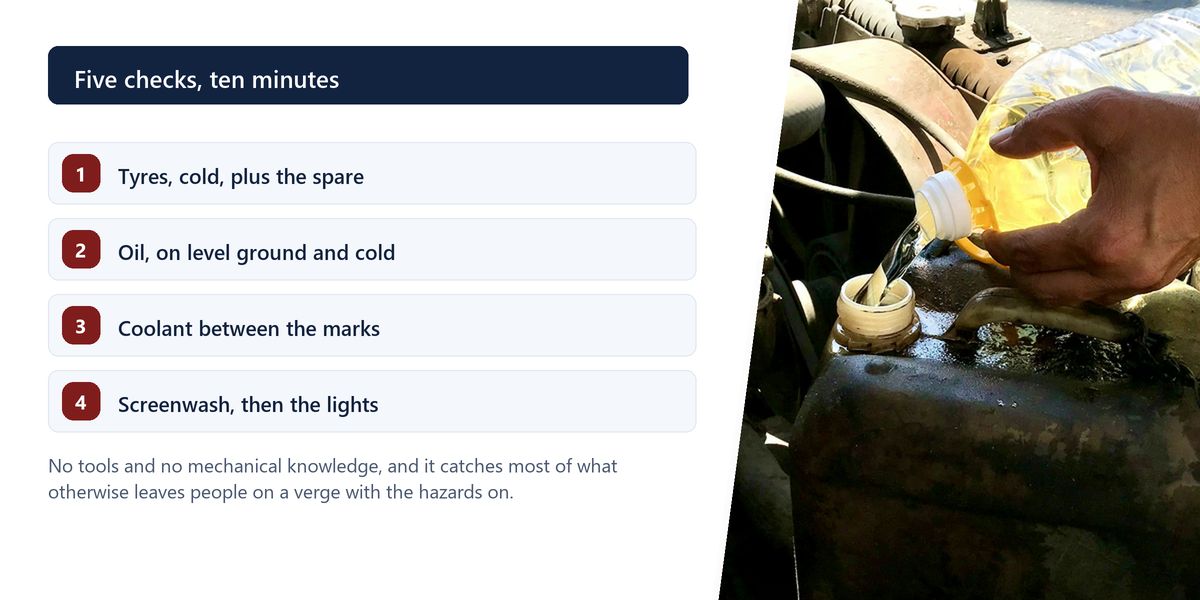
Five checks, ten minutes a month, and most roadside breakdowns never happen.

6 min read

—Not yet rated
Five checks, ten minutes a month, and most roadside breakdowns never happen.
Roadside assistance organisations publish their breakdown causes each year, and the list is remarkably stable. Battery problems, tyre problems and running out of fuel account for a very large share of call-outs.
What those have in common is that they are almost all visible in advance. A battery that struggles on cold mornings has been warning you for weeks. A tyre below the legal tread depth did not get there overnight.
Ten minutes a month prevents most of it, and none of it requires mechanical knowledge.
Tyres are the only part of a car touching the road, and they are the component most commonly found in poor condition.
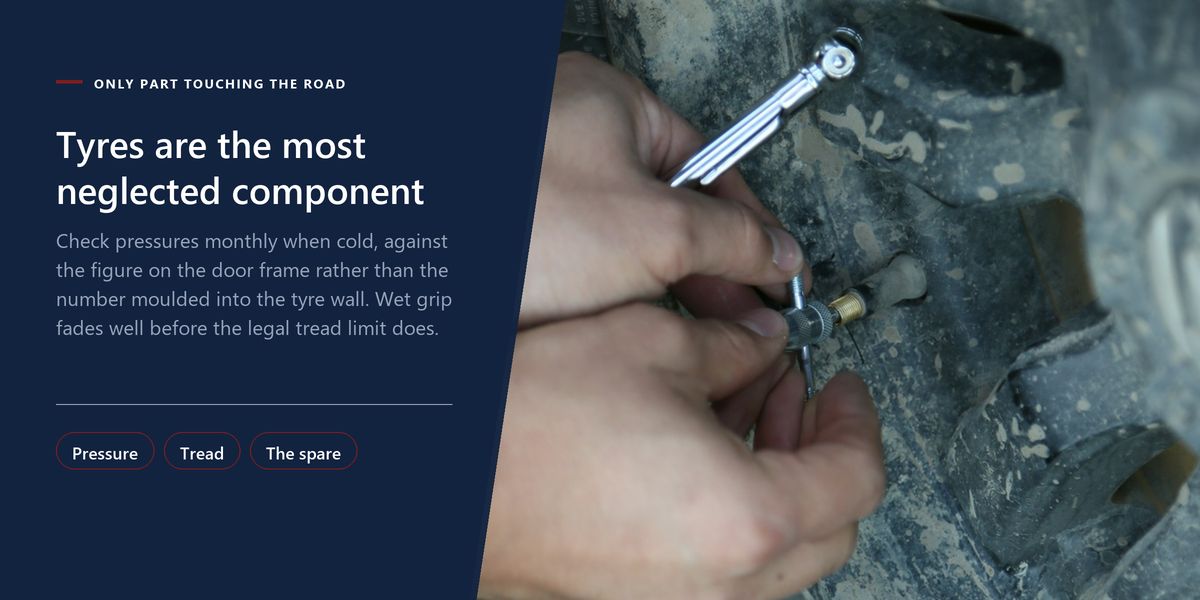
Four fluids matter for routine checks, and all are checked with the engine cold and the car on level ground.
Engine oil is the most important. Check with the dipstick, top up if it is near the minimum, and use the grade specified in the manual — modern engines are considerably more particular about oil specification than older ones. Oil that is very dark and gritty suggests it is overdue for changing.
Coolant should sit between the marks on the expansion tank. Never open a cooling system while hot, as it is pressurised and can cause serious scalding. Screenwash is trivial and worth keeping full, since visibility is a safety matter. Brake fluid should be checked visually; a falling level suggests a leak or worn pads, and both warrant a garage.
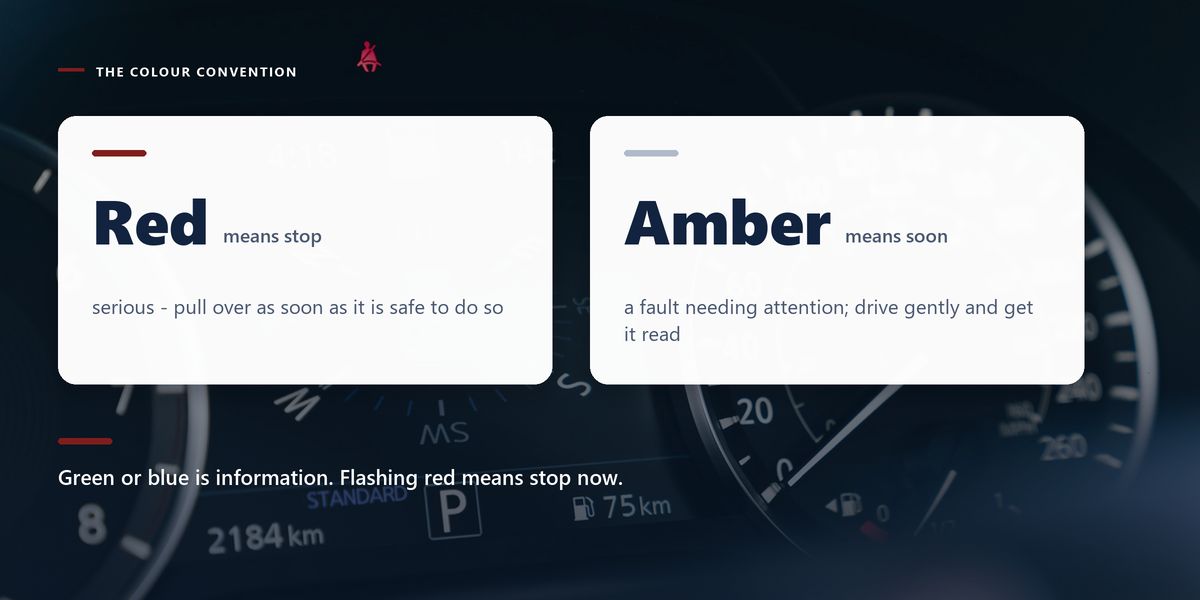
Dashboard symbols vary between manufacturers, and the colour convention is consistent and worth knowing.
| Colour | Meaning | What to do |
|---|---|---|
| Red | serious — potential damage or danger | stop safely as soon as possible |
| Amber or yellow | a fault needing attention | investigate soon; drive cautiously |
| Green or blue | a system is active | informational only |
| Flashing red | urgent | stop immediately and safely |
Two red lights deserve specific mention. The oil pressure warning — an oil can symbol — means stop the engine as soon as it is safe, because running without oil pressure destroys an engine within minutes. The temperature warning means the engine is overheating and continuing can warp components in a way that is very expensive to repair.
The engine management light in amber is the most misunderstood. It can indicate anything from a loose fuel cap to a failing sensor. If the car is driving normally it is usually safe to continue and get it read soon; if it is flashing or the car is running badly, treat it as urgent.
Have the fault codes read when a warning light appears, rather than guessing or ignoring it. Many garages and parts shops will do this quickly and cheaply, and an inexpensive plug-in reader pays for itself the first time it turns an unknown warning into a specific, minor fault.
Battery failure is among the most common breakdown causes and among the most predictable. The signs appear well in advance: slow or laboured cranking on cold mornings, dashboard lights dimming noticeably when starting, or electrical accessories behaving oddly.
Batteries typically last a few years and fail sooner with short journeys, which never fully recharge them. If your driving is mostly short trips, an occasional longer run helps, or a maintenance charger for cars left standing.
If a battery is more than about four years old and showing symptoms, replacing it is cheaper and less disruptive than the eventual failure, which happens in a car park in the rain and rarely at a convenient moment.
Service intervals are set by the manufacturer based on how components wear, and skipping them saves money in the short term at real risk.
The items most worth not deferring are oil and filter changes, brake inspection, and the cambelt where a car has one. That last item deserves emphasis: on many engines a failed cambelt causes catastrophic internal damage, and replacement is a scheduled item with a specific interval that must be respected.
A full service history also has real resale value, frequently exceeding what the servicing itself cost.
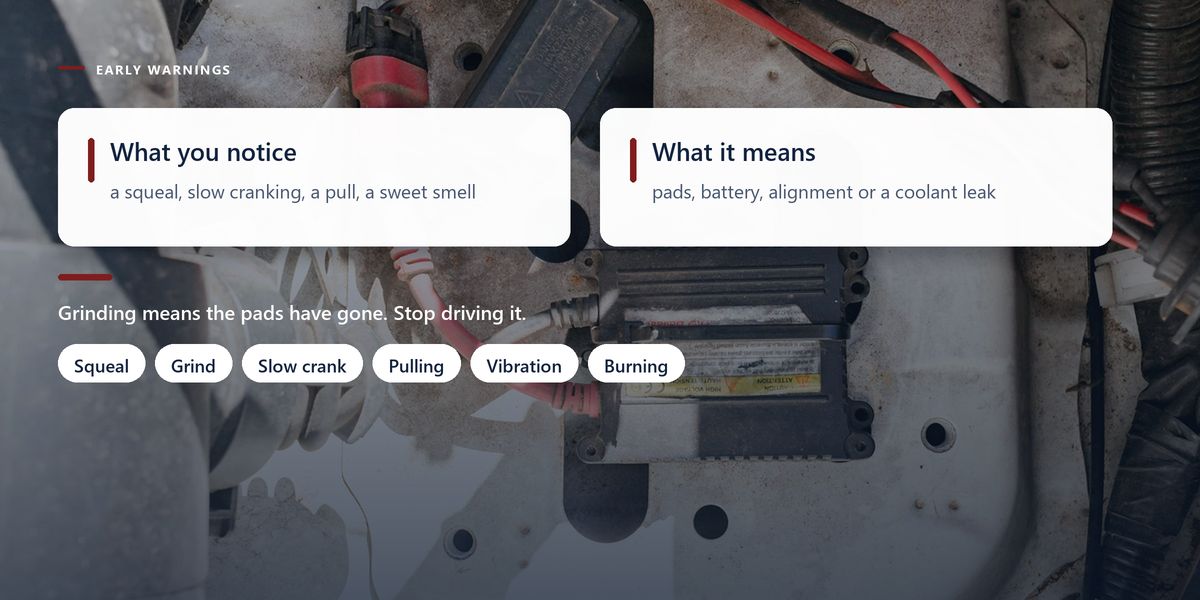
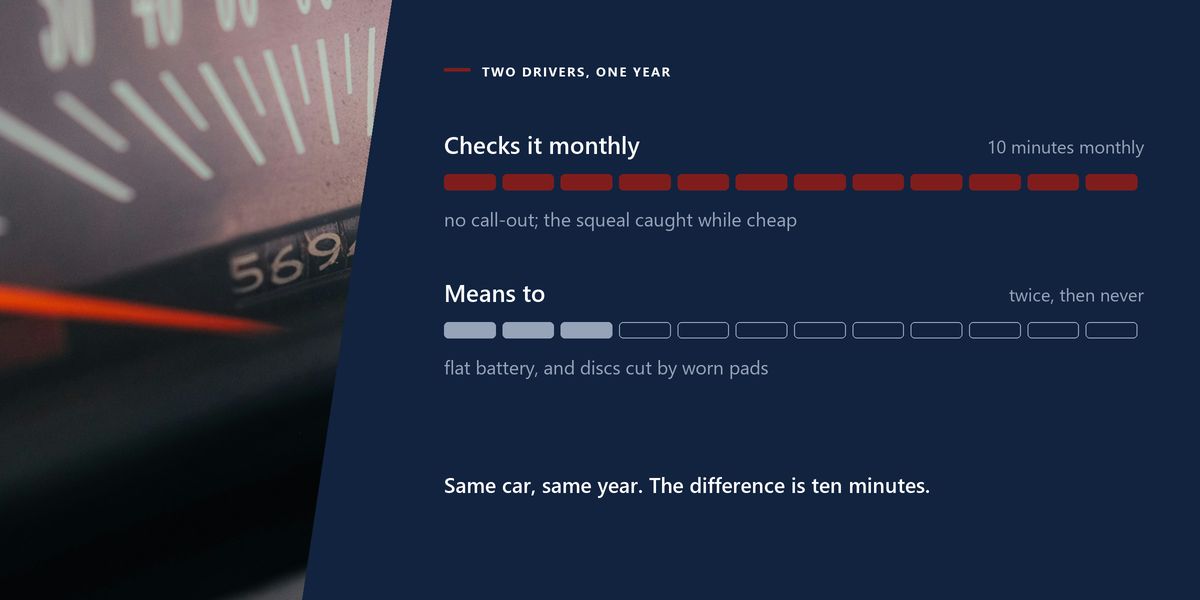
A driver noticed a light squeal when braking and, since the car stopped perfectly well, decided to mention it at the service booked for two months later.
By the time it reached the garage the squeal had become a grind. The pads had worn through and been cutting into the discs for several weeks.
The job went from replacing pads to replacing pads and discs on both front wheels, roughly tripling the bill. The squeal had been the designed warning — a small metal tab that contacts the disc specifically to make that noise while there is still time.
Never work underneath a car supported only by a jack. Jacks fail, and people are killed this way every year. Use axle stands on firm level ground, and if a job requires getting under a vehicle and you are unsure, it belongs at a garage. The same applies to anything involving brakes, steering or airbags.
Before winter, check the battery, the antifreeze concentration, tyre tread and screenwash rated for low temperatures. Cold weather exposes weak batteries and thin tread immediately.
Before a long trip, run the full monthly check plus the spare and any legally required equipment for the countries you are entering. It is fifteen minutes against the possibility of a breakdown somewhere unfamiliar.
Check tyres, oil, coolant, screenwash and lights monthly. Learn the warning light colour convention and treat red as stop. Watch for battery symptoms before failure. Keep to service intervals, particularly oil and cambelt. Investigate new noises, smells and vibrations early, and never work under a car on a jack alone.
Cars are unusually communicative before they fail. They squeal, they crank slowly, they vibrate, they leak — almost always before the actual breakdown.
Ten minutes a month is the whole discipline. If you are considering going electric, our guide to buying a first electric car covers a different set of questions.
Tap a star to share what you thought.
No ratings yet
Tyre pressures when cold and tread depth including the spare, engine oil level, coolant level, screenwash, and a walk-around checking all lights. The whole routine takes about ten minutes and needs no tools.
Red indicates a serious problem — stop safely as soon as possible. Amber or yellow means a fault needing attention soon. Green or blue is purely informational, showing a system is active.
If the light is steady and the car is driving normally, it is usually safe to continue and have the fault codes read soon. If it is flashing, or the car is running roughly or losing power, treat it as urgent and stop.
Slow or laboured cranking, especially on cold mornings, dashboard lights dimming noticeably during starting, and electrical accessories behaving oddly. Batteries typically give weeks of warning, and short journeys shorten their life considerably.
Usually worn brake pads. Many pads include a metal wear indicator designed to squeal specifically to warn you while there is still time. If the noise becomes a grinding sound, the pads are gone and the discs are being damaged.
It is a false economy, particularly for oil changes, brake inspections and cambelt replacement. A failed cambelt causes catastrophic engine damage on many designs, and a full service history typically returns more at resale than the servicing cost.
Sign in to join the conversation.
Loading responses…
Have a story, idea, or something valuable to share? Join The Blog Story for free, publish your content, reach more readers, and earn a share of advertising revenue from eligible content.
Create quality content. Grow your audience. Grow your earning potential.