Renter-Friendly Interior Design: Making a Rented Flat Feel Like Yours
You cannot paint the walls. You can change almost everything that actually matters.

5 min read
—Not yet rated
You cannot paint the walls. You can change almost everything that actually matters.
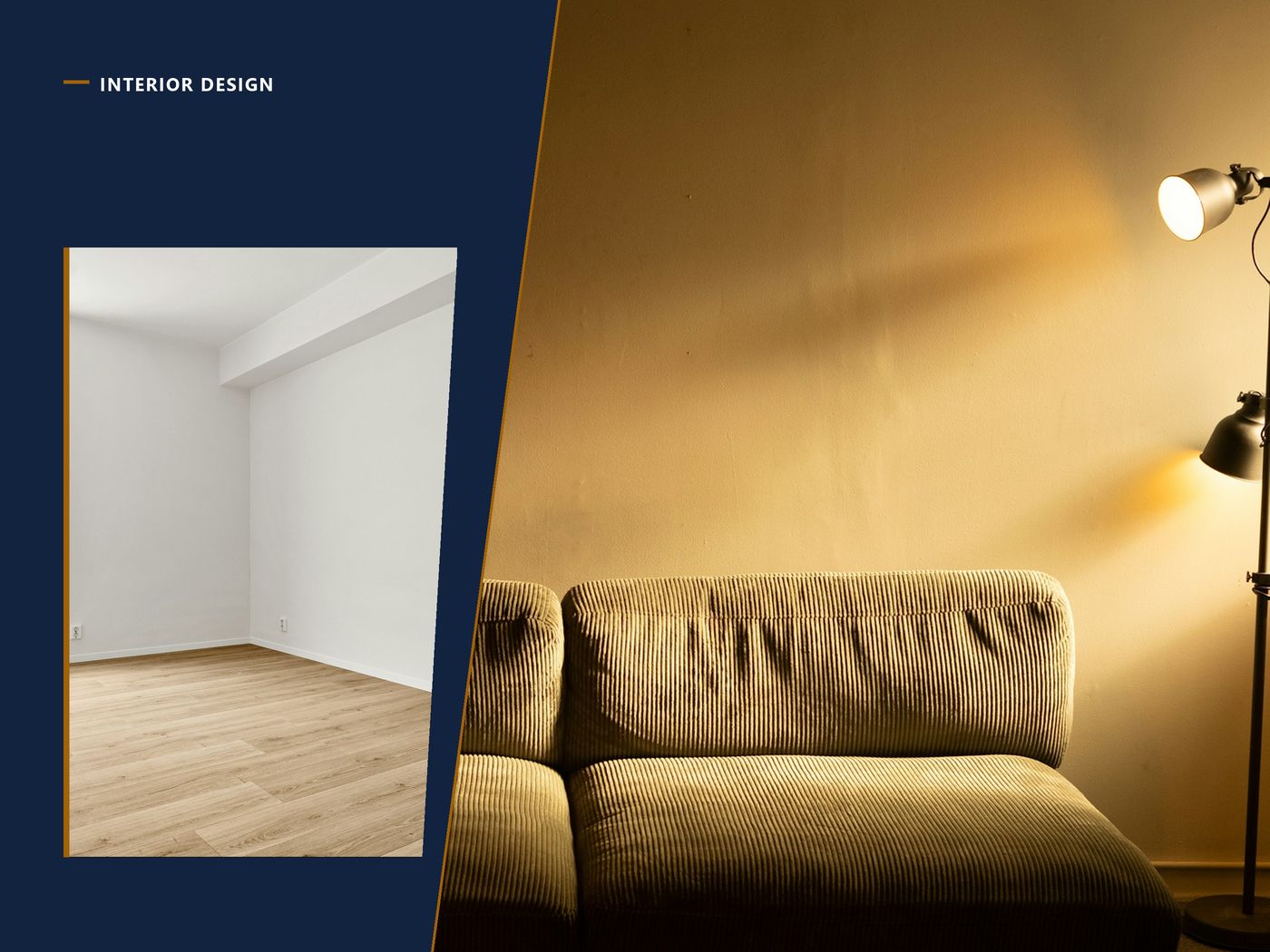
Rented flats have a distinctive look, and it is not accidental. Landlord-white walls, a hard-wearing beige floor, and one bright ceiling light per room, positioned in the middle, illuminating nothing in particular.
Every renter's instinct is that they cannot change any of it. In fact the two things doing most of the damage — the lighting and the soft furnishings — are entirely under your control and travel with you when you leave.
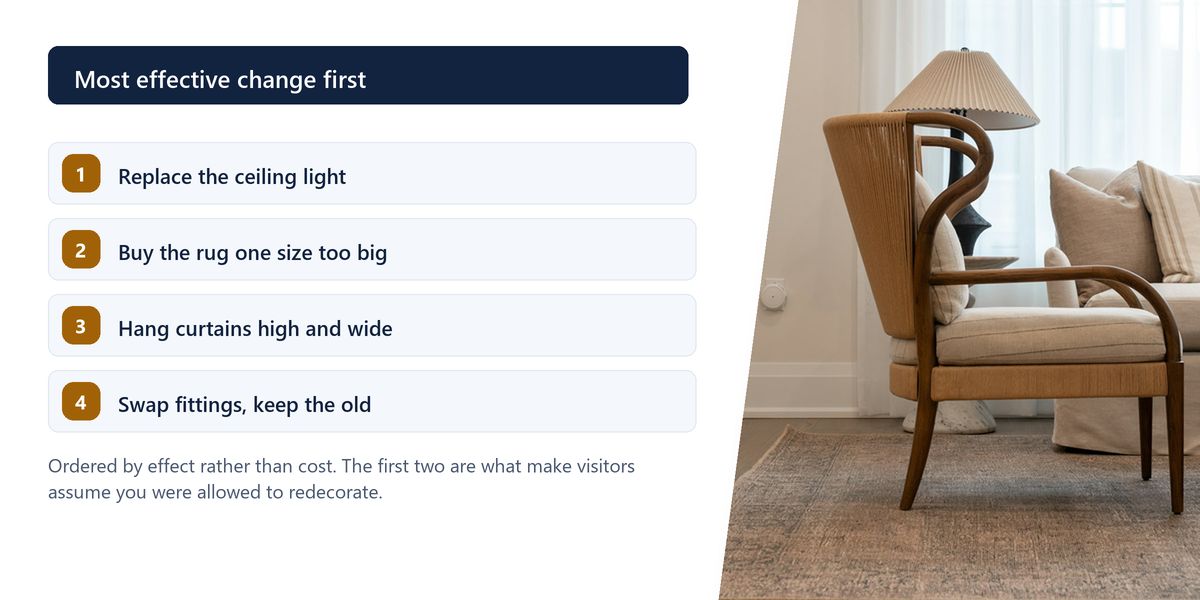
Here is what changes a rented space most, ordered by effect rather than by cost.
A single bright ceiling light is why rented rooms feel like waiting areas. It casts flat, even, shadowless light from directly above, which is unflattering to the room and to everyone in it.
The fix requires no permission and no tools: add lamps. Three or four light sources at different heights — a floor lamp in a corner, a table lamp on a side table, something low near seating — replaces one overhead glare with pools of light, and the room immediately reads as considered.
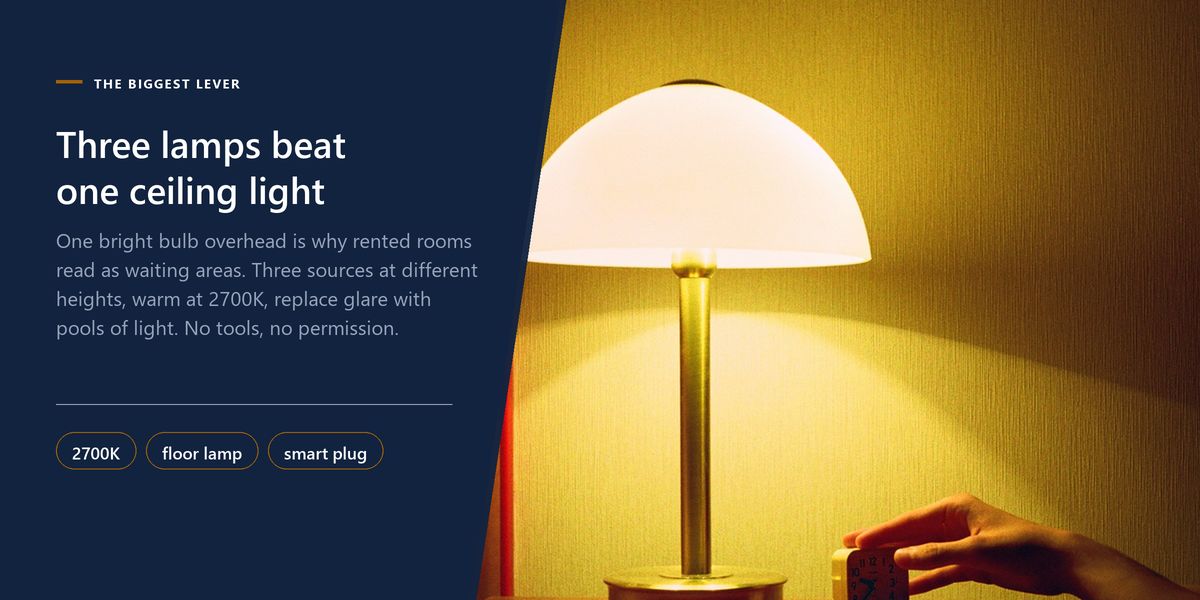
Two details matter more than the lamps themselves. Use warm bulbs, around 2700K, since cool white lighting is what makes rooms feel institutional. And put lamps on a smart plug or a timer if you can, so the room switches into evening mode without anyone deciding to.
Rentals are specified for durability, which in practice means hard, wipeable and echoey. Sound bounces, everything feels slightly cold, and the eye finds nothing to rest on.
Textiles fix this faster than anything else. A large rug — larger than you think, ideally with the front legs of the furniture on it — anchors a room and absorbs sound. Full-length curtains hung high and wide make windows look bigger and soften the walls around them. Cushions and a throw do more work than their price suggests.
A surprising amount of rental irritation is reversible with products designed exactly for this, provided you check your tenancy agreement and, where in doubt, ask.
| The problem | Renter-friendly fix | Reversible? |
|---|---|---|
| Bare white walls | large art on picture rails, or leaning frames | yes, no fixings needed |
| Ugly kitchen splashback | peel-and-stick tiles | usually, on smooth surfaces |
| Worn or cold flooring | large rugs, or interlocking floor tiles | yes |
| Dated cupboard handles | unscrew and replace, keep the originals | yes, if you keep the old ones |
| Harsh ceiling light | a fabric shade or a plug-in pendant | yes |
| No storage | freestanding shelving, not wall-mounted | yes |
Keep every original fitting you remove — handles, shades, shower heads — in a labelled box. Swapping them back on moving day takes twenty minutes and protects your deposit completely, which is what makes these changes worth doing in the first place.
The most common decorating mistake in a small rented flat is buying furniture that is too small, on the theory that small rooms need small things. The result is a room full of little items, which reads as cluttered rather than spacious.
Fewer, larger pieces almost always look better. One generous sofa beats two small chairs and a footstool. One large artwork beats six small frames. A rug that reaches under the furniture makes a room look larger; a small rug floating in the middle makes it look smaller.
The exception is depth. In a narrow room, choose pieces with a shallow footprint — a slim console rather than a deep sideboard — since circulation space is what makes a room feel comfortable to be in.
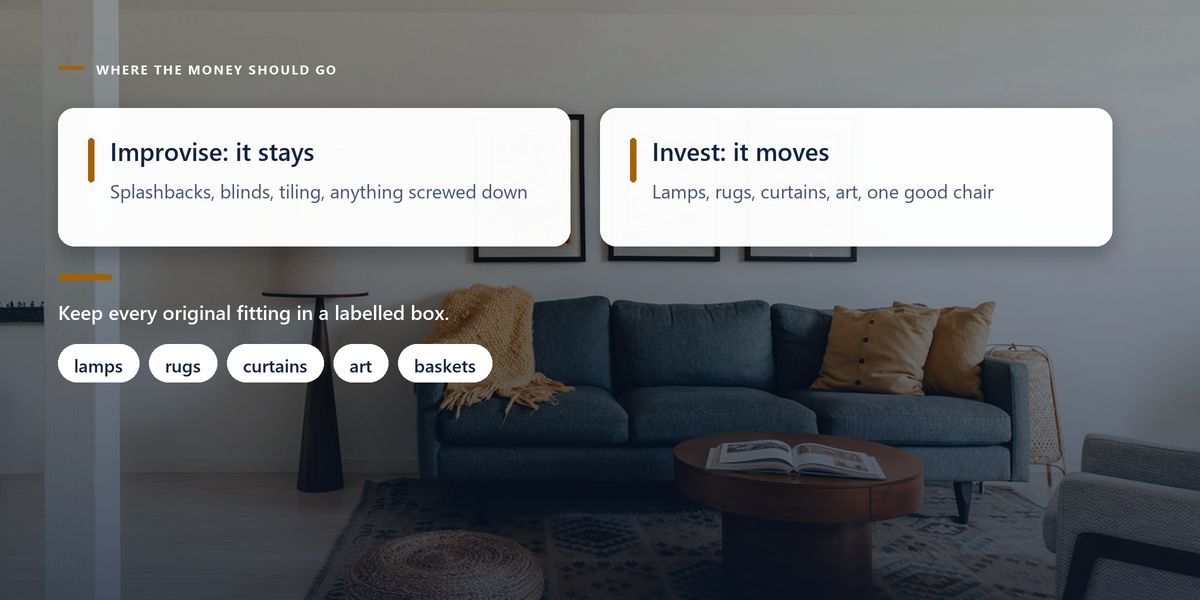
The clearest rule for renting is to distinguish between the flat and your possessions. Anything you take to the next place is an investment; anything left behind is a cost.
So spend on lamps, rugs, bedding, art, a good chair and storage that is freestanding rather than fitted. Improvise on anything attached to the building — the splashback, the blinds, the tiling. You will not miss the twelve pounds spent on peel-and-stick tiles; you will use the floor lamp for a decade.
A couple moved into a rented one-bedroom with white walls, a beige carpet and a single ceiling light in each room. They spent two years assuming there was nothing to be done about it.
In one weekend they added a floor lamp and two table lamps with warm bulbs, hung floor-length curtains from ceiling tracks in the living room and bedroom, and put down a rug large enough for the sofa's front legs to sit on. Total spend was around three hundred pounds.
Nothing structural changed. Every visitor afterwards assumed they had been allowed to redecorate, and all of it moved with them to the next flat.
Read your tenancy agreement before adhesive anything. Peel-and-stick products advertised as removable can lift paint or laminate, particularly in warm rooms or after a couple of years. Test an inconspicuous corner first, and photograph the original condition of everything when you move in — that record is worth more than any decorating tip here.

Replace the ceiling light with several lamps at different heights, using warm bulbs. Add a large rug and full-length curtains. Choose fewer, larger pieces of furniture. Use reversible fixes for fitted irritations, keeping every original part. Spend on what moves with you.
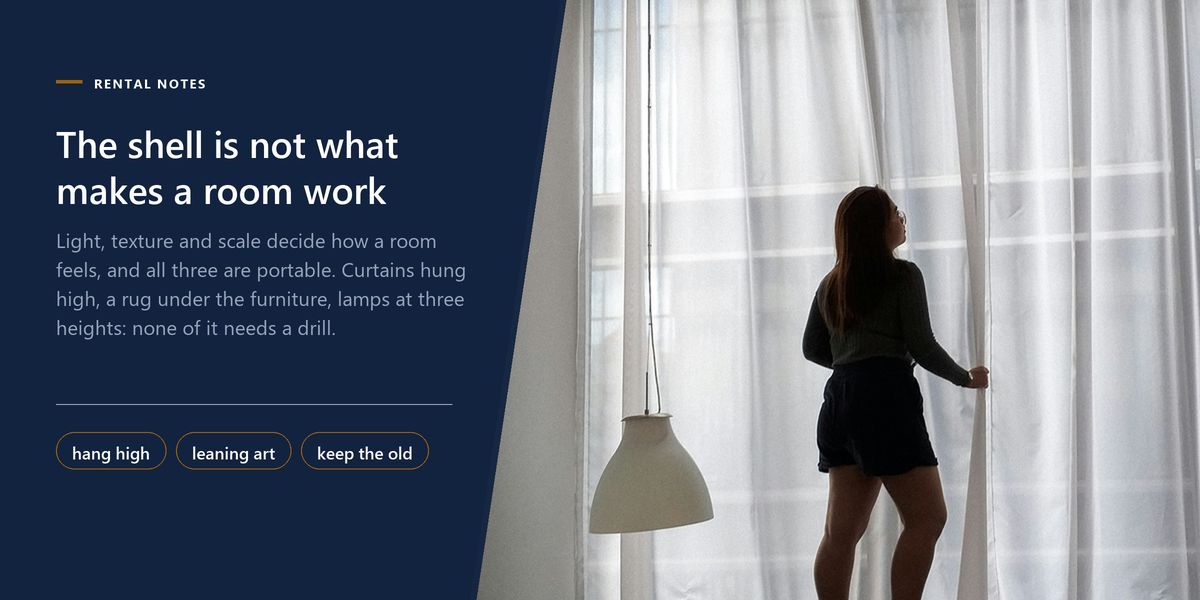
Renting limits what you can change about the shell of a home, and the shell is not really what makes a room feel good to be in. Light, texture and scale do — and all three are portable.
Start with the lamps. It is the cheapest change on the list and the one people notice first without being able to say why.
Tap a star to share what you thought.
No ratings yet
Lighting. Replacing a single bright ceiling light with three or four lamps at different heights, fitted with warm bulbs around 2700K, changes how a room feels more than anything else you can do without permission.
A large flat-weave rug is the simplest option and moves with you. Interlocking floor tiles work over hard floors in kitchens and bathrooms. Choose a rug big enough that furniture sits partly on it, or the room will look smaller.
Lean larger pieces against the wall on furniture or the floor, use picture rails if the property has them, or hang from over-door hooks. Adhesive strips work on some surfaces but can lift paint, so test discreetly and check your tenancy agreement.
Use fewer, larger pieces rather than many small ones, hang curtains high and wide so windows look larger, keep circulation space clear, and choose furniture with a shallow footprint in narrow rooms.
On things that leave with you, yes — lamps, rugs, curtains, bedding, art and freestanding storage will serve you across several homes. Keep spending on anything fixed to the building as low as possible.
Sometimes. Products marketed as removable can lift paint or laminate, particularly in warm rooms or after long periods. Test an inconspicuous area, check your agreement, and photograph the original condition when you move in.
Sign in to join the conversation.
Loading responses…
Have a story, idea, or something valuable to share? Join The Blog Story for free, publish your content, reach more readers, and earn a share of advertising revenue from eligible content.
Create quality content. Grow your audience. Grow your earning potential.