How to Sleep Better: A Practical Guide That Is Not Just 'Go to Bed Earlier'
Sleep is mostly decided by what happens in the sixteen hours before it.

6 min read
—Not yet rated
Sleep is mostly decided by what happens in the sixteen hours before it.
There is a particular kind of tiredness that no amount of coffee fixes. You slept for seven hours, technically, and you feel as though you spent the night negotiating with your own brain — which, more or less, you did.
Most sleep advice arrives as a list of things to do in the last ten minutes of the day. Dim the lights, avoid your phone, try lavender. Some of it helps a little. Almost none of it addresses the parts of the day that actually determine how you will sleep.
Sleep is the end of a process that starts when you wake up. Here is what genuinely moves it, roughly in order of how much difference it makes.
If you change one thing, change this. A consistent wake time anchors your body clock far more effectively than a consistent bedtime, because morning light and activity are the strongest signals your internal clock receives.
The weekend lie-in is the most common disruption. Sleeping three hours later on Saturday and Sunday shifts your clock roughly as much as flying across a couple of time zones — which is why Monday morning so reliably feels like jet lag. It is, functionally, jet lag.
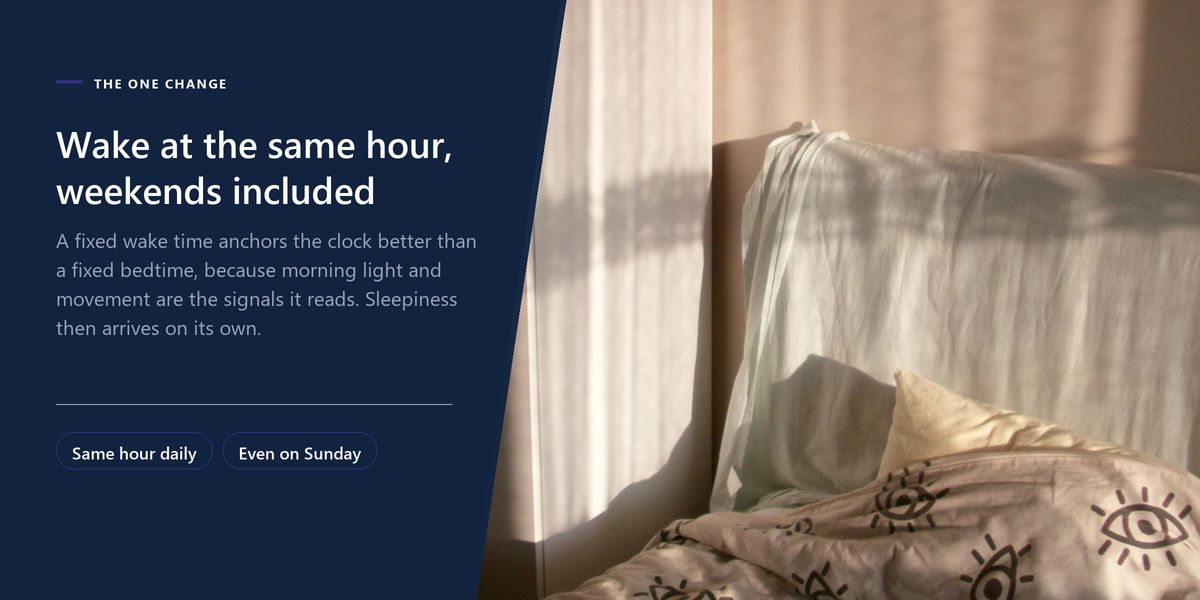
A consistent wake time also fixes bedtimes on its own. Get up at the same hour every day and you will become sleepy at a predictable hour without having to enforce it.
Light is the primary input your circadian system uses to work out what time it is. Bright light in the morning tells your body the day has started, which sets the timer for feeling sleepy roughly fourteen to sixteen hours later.
Ten to twenty minutes outside within an hour of waking is more effective than any indoor lighting, even on an overcast day — outdoor light is dramatically brighter than a well-lit room, by a factor most people badly underestimate.
In the evening the opposite applies. Bright overhead lighting for the last hour or two delays the signal. Lower, warmer lamps are more useful than any specific rule about screens, which matter mostly because of how bright and how engaging they are rather than their colour.
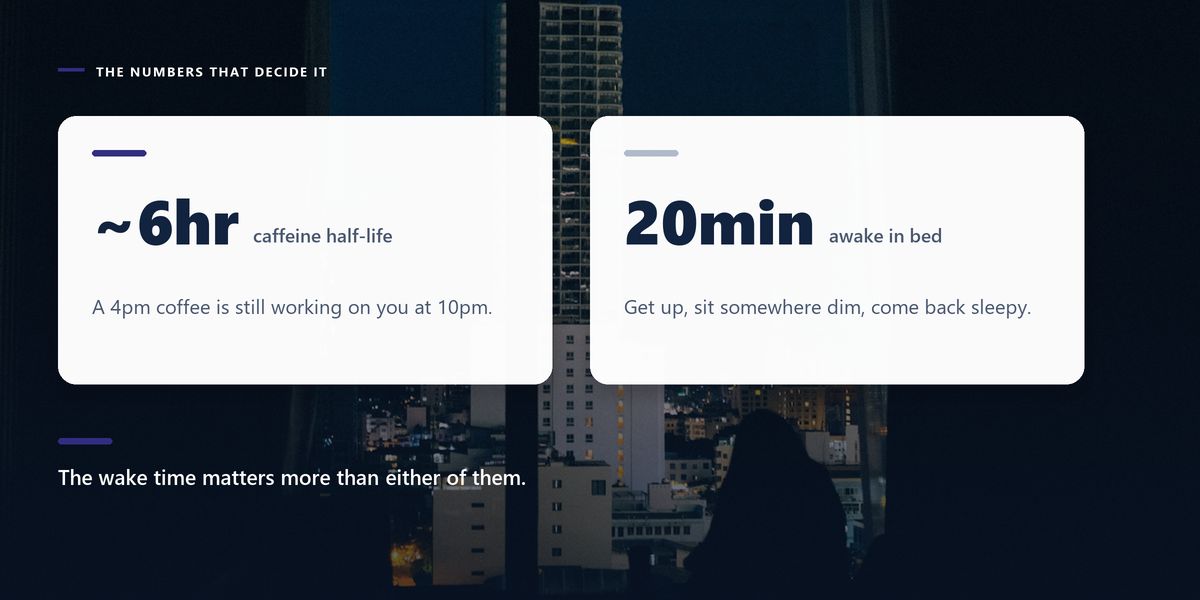
Caffeine's half-life is commonly around five to six hours, which means a substantial portion of a 4pm coffee is still circulating at 10pm. People who insist caffeine does not affect their sleep are often right that it does not stop them falling asleep, and wrong about the quality of what follows.
A practical rule is to stop caffeine roughly eight hours before bed, then judge for yourself. Two weeks is enough to notice the difference, and the effect is frequently larger than people expect.
Alcohol deserves a mention here too, because it is widely used as a sleep aid and is a poor one. It shortens the time to fall asleep and then fragments the second half of the night, which is why a nightcap so often produces a 3am wake-up.
| Substance or habit | Effect on falling asleep | Effect on sleep quality |
|---|---|---|
| Afternoon caffeine | often none noticeable | reduces deep sleep measurably |
| Alcohol in the evening | makes it faster | fragments the second half of the night |
| Late heavy meal | little | discomfort and reflux disturb sleep |
| Evening exercise | usually fine | generally positive, unless very intense and very late |
| Long afternoon nap | makes it harder | reduces sleep pressure at night |
Three physical variables carry most of the weight: temperature, darkness and noise. A bedroom that is slightly cool is better than a warm one, because core body temperature has to drop for sleep to begin and a hot room fights that.
Darkness matters more than people assume; even modest light can register. Blackout curtains and taping over standby LEDs are unglamorous and effective. For noise, consistency beats silence — steady background sound masks the sudden noises that cause brief awakenings you will not remember but will feel.
Keep the bedroom for sleep. If you work, eat and watch television in bed, your brain learns that bed is a place where alertness is appropriate. That association is built through repetition, and it can be rebuilt the same way.
Waking briefly in the night is normal and not a problem in itself. The problem starts when you lie there, increasingly annoyed, doing mental arithmetic about how much sleep is left.
The counter-intuitive advice from sleep clinicians is to get up. If you have been awake for roughly twenty minutes, leave the bed, go somewhere dimly lit, do something undemanding, and return when you feel sleepy. This prevents your brain from associating bed with frustrated wakefulness.
It feels wrong the first few times and works reliably over a few weeks. Lying in bed trying harder to sleep is the one strategy with a genuinely poor track record — sleep is not a thing effort improves.
A hospital administrator went to bed at 11pm most nights and woke up exhausted. She had bought a weighted blanket, a sunrise alarm and three kinds of herbal tea, and none of it had changed anything.
Her wake time varied between 6:15 on weekdays and 9:30 at weekends, she drank her last coffee at about 4pm, and she worked from her bed for an hour most evenings.
She changed three things: a fixed 6:45 wake time every day, no caffeine after 11am, and no laptop in the bedroom. Nothing about her bedtime changed. Within three weeks she was falling asleep faster and waking without an alarm most days.
Persistent insomnia, loud snoring with pauses in breathing, or overwhelming daytime sleepiness despite adequate hours are medical matters rather than habit problems. Sleep apnoea in particular is common, frequently undiagnosed, and treatable — if any of that sounds familiar, it is worth speaking to a doctor rather than adjusting your evening routine.
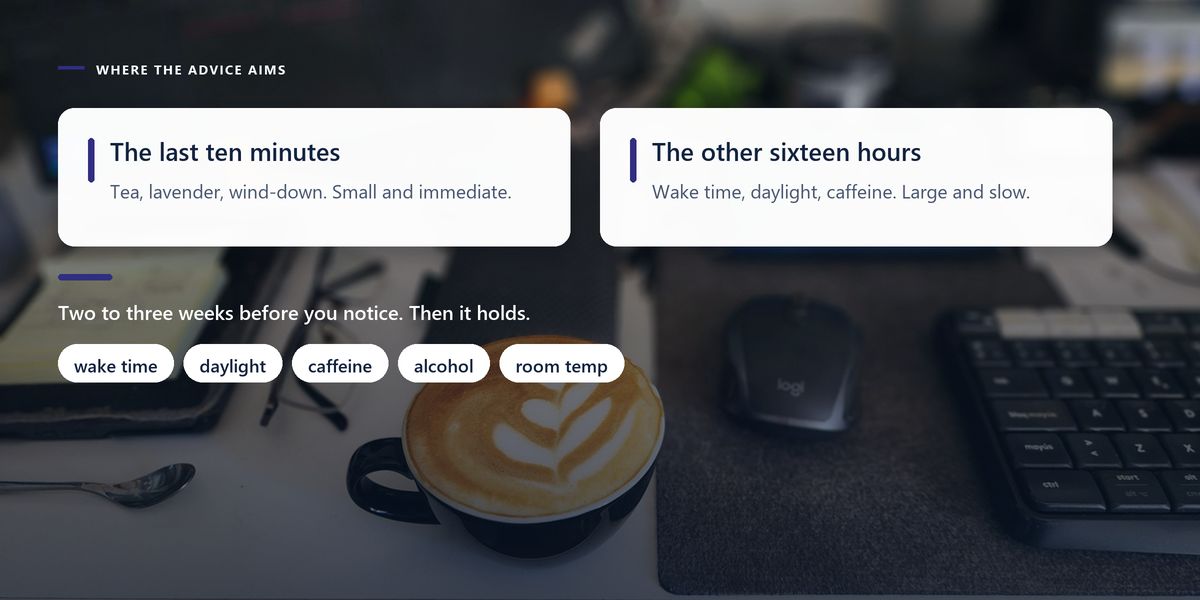
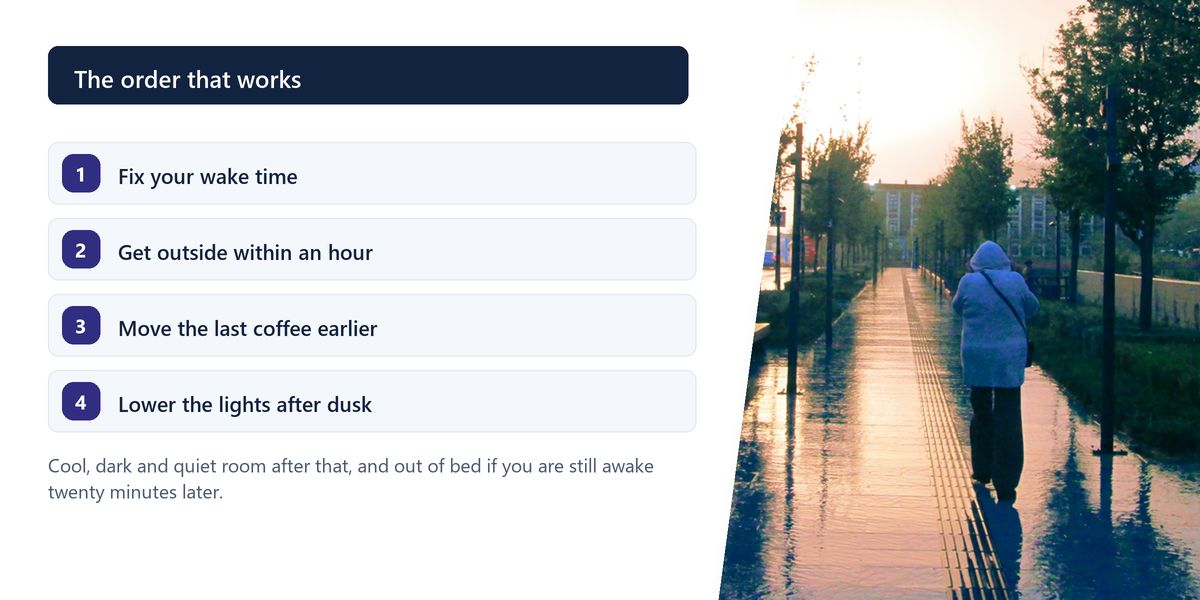
Fix your wake time and keep it at weekends. Get outside in the morning and lower the lights in the evening. Move caffeine earlier and treat alcohol as a sleep disruptor rather than an aid. Keep the room cool, dark and quiet, reserve the bed for sleep, and get up if you are awake for twenty minutes.
Sleep resists being forced, which is why trying harder is the one approach that consistently fails. What it responds to is a stable rhythm and the right signals at the right times of day.
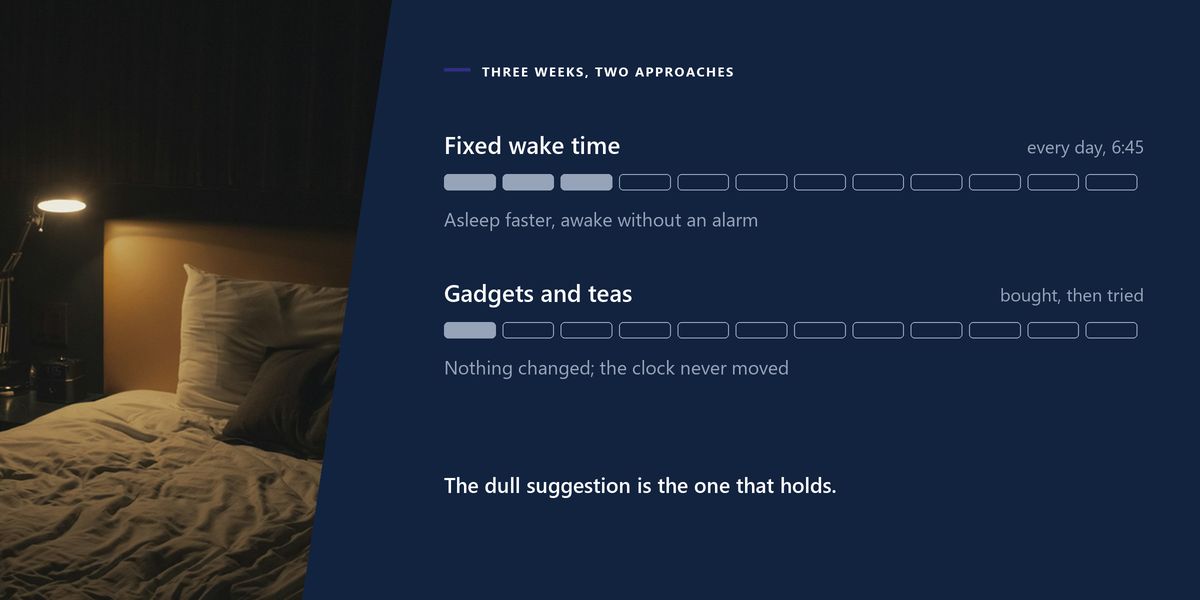
Change the wake time first and give it three weeks. It is the least appealing suggestion on the list and reliably the most effective.
Tap a star to share what you thought.
No ratings yet
A consistent wake time, kept at weekends. Morning light and activity are the strongest signals your body clock receives, and fixing the wake time tends to fix the bedtime on its own within a couple of weeks.
Because sleeping several hours later shifts your body clock by roughly the same amount as travelling across time zones. Monday morning then feels like jet lag, because functionally it is.
Caffeine's half-life is commonly around five to six hours, so a mid-afternoon coffee is still partly active at bedtime. Stopping about eight hours before bed is a reasonable starting rule, then adjust based on how you sleep over a couple of weeks.
It helps you fall asleep and harms the sleep that follows. Alcohol fragments the second half of the night, which is a common cause of waking around 3am and struggling to settle again.
Brief waking is normal. If you have been awake around twenty minutes and are becoming frustrated, get up, go somewhere dimly lit, do something undemanding and return when sleepy. Lying there trying harder is the least effective option.
Adult sleep needs vary, roughly between seven and nine hours. How alert you feel in the mid-afternoon is a more useful signal than hitting a specific number, and anxiety about the number can itself disturb sleep.
Sign in to join the conversation.
Loading responses…
Have a story, idea, or something valuable to share? Join The Blog Story for free, publish your content, reach more readers, and earn a share of advertising revenue from eligible content.
Create quality content. Grow your audience. Grow your earning potential.