Building a Wardrobe You Actually Wear
Most people wear a fraction of what they own. The rest was bought for a life they do not have.

6 min read

—Not yet rated
Most people wear a fraction of what they own. The rest was bought for a life they do not have.
Open almost any wardrobe and you will find the same thing: a small cluster of items worn constantly, and a much larger population of clothes worn once, twice or never — each bought for a good reason that turned out not to be a real one.
The usual response is to buy more, which is how the collection grew in the first place. The alternative is duller and works considerably better: understand what you actually wear, and buy things that join it.
That is really all a capsule wardrobe is. Not an aesthetic and not a number of items — a set of clothes that combine easily and suit the life you have.
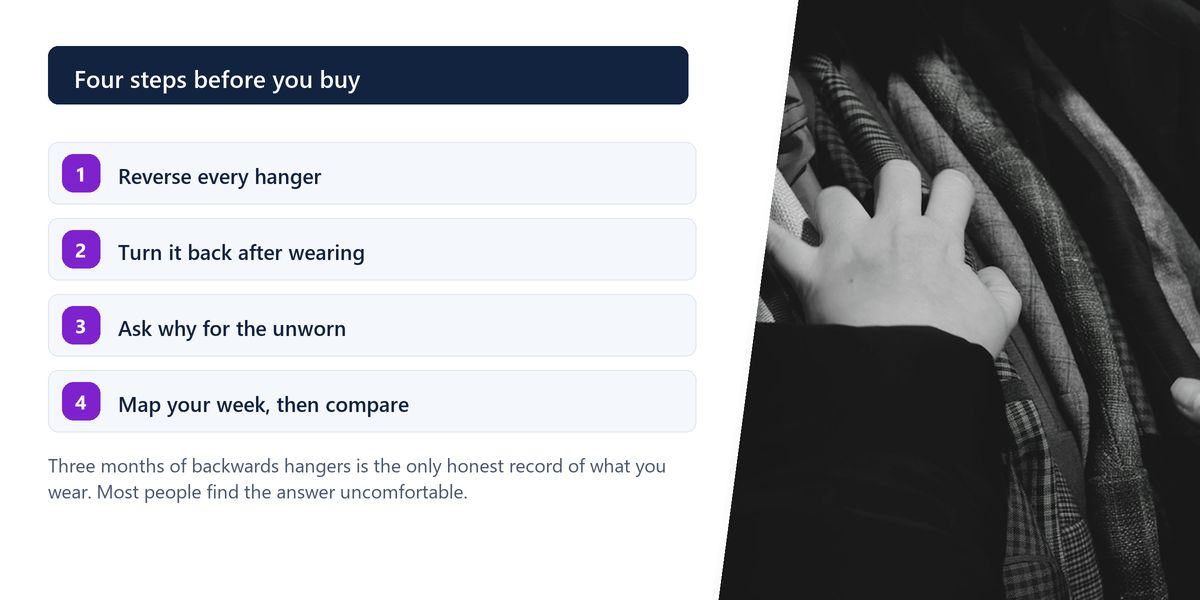
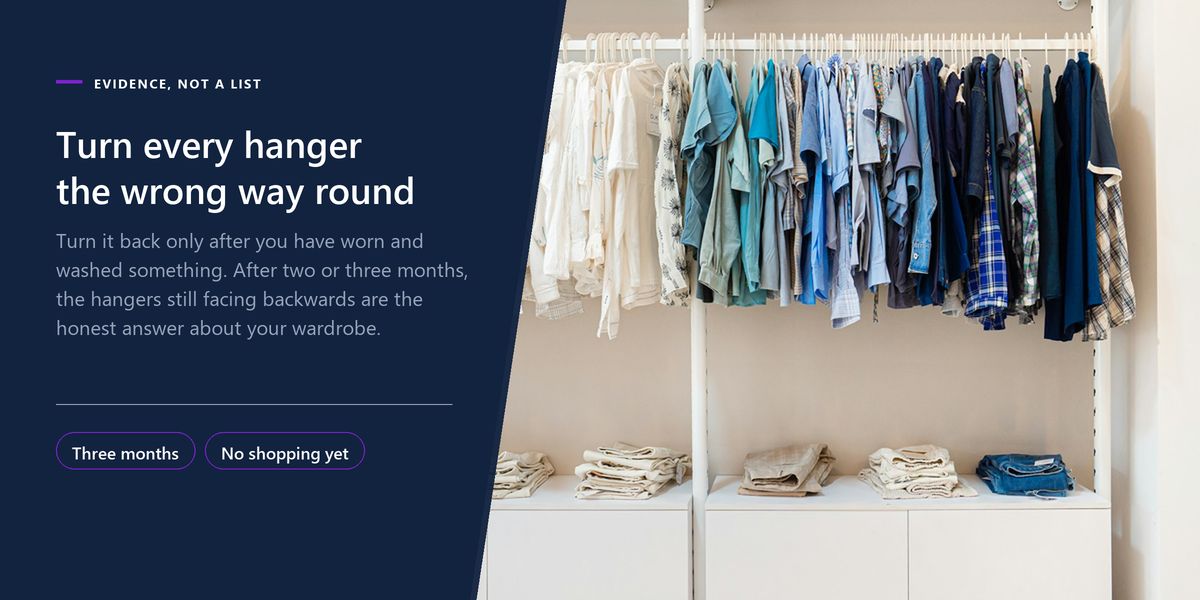
Before buying or discarding anything, gather data. The simplest method is the hanger trick: turn every hanger backwards, and turn it the right way round after you wear and wash something. After two or three months, the backwards hangers are the honest answer.
The result is usually uncomfortable. Most people find that a modest number of items account for the large majority of wears, and that several expensive purchases have never been worn at all.
Then ask why for each unworn item, because the answers repeat and are useful. It does not fit properly. It needs something I do not own. It is uncomfortable after an hour. It suits an occasion I attend twice a year. Each of those is a rule for future purchases.
The most common wardrobe mismatch is buying for an imagined life. Someone who works from home four days a week owning mostly tailoring; someone who is outdoors constantly owning mostly delicate fabrics; a shelf of occasion wear for a social calendar that has three occasions a year.
The fix is arithmetic rather than taste. Divide a typical week into categories — work, home, exercise, social, outdoors — and note roughly what proportion each takes. Then compare against your wardrobe. The two should look broadly similar, and they very often do not.
The reason capsule wardrobes work is combinatorial. If most of your items sit in a small, coherent colour family, almost everything goes with almost everything else, and getting dressed stops requiring a decision.
Pick two or three neutrals that suit you — navy, grey, black, cream, olive, tan, brown — and let them carry the volume: trousers, outerwear, knitwear, shoes. Then use colour and pattern deliberately in a smaller number of pieces, where they do the most work.
This is not an argument for dressing entirely in beige. It is an argument for the structural items being quiet so the expressive ones have somewhere to sit.
| Category | Roughly how many | What matters most |
|---|---|---|
| Everyday tops | 6 to 10 | fabric that survives washing |
| Trousers, skirts, jeans | 3 to 5 | fit, and the rise being right for you |
| Knitwear or layers | 3 to 4 | natural fibres if you can afford them |
| Outerwear | 2 to 3 | one for rain, one for cold, one smart |
| Shoes | 3 to 5 | comfort — uncomfortable shoes are never worn |
| Occasion wear | 1 to 2 | sized for the body you have now |
Get things altered. A ten-pound hem or a taken-in waist transforms how often a garment is worn, and most people have several items that are nearly right sitting unused. Tailoring an existing piece is almost always better value than buying a new one that also does not quite fit.
Ask anyone about their favourite item of clothing and they rarely describe the design. They describe how it feels and how it fits — which is exactly what determines whether something gets worn.
For fit, the shoulder seam is the hardest thing to alter and the most important to get right. Length, waist and hem are all adjustable; shoulders effectively are not. Buy for the shoulders and alter the rest.
For fabric, learn to check the composition label. Natural fibres and better blends breathe more, hold shape longer and age more gracefully, though they need more care. Very cheap synthetics tend to pill, hold odour and lose shape within a season, which makes their low price misleading.
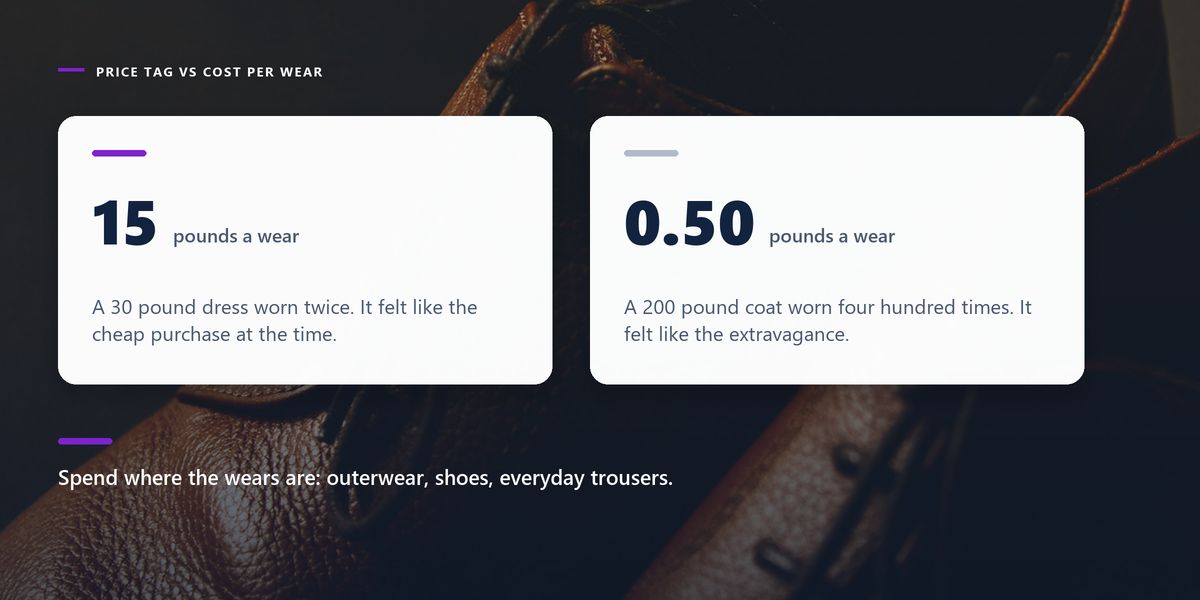
A coat costing two hundred pounds and worn four hundred times costs fifty pence a wear. A dress costing thirty pounds and worn twice costs fifteen pounds a wear. The expensive item was the cheap one.
This reframes almost every purchase decision. Spend generously on the things you wear constantly — outerwear, shoes, everyday trousers, a bag you carry daily. Spend little on things that are genuinely occasional, trend-driven, or that you are unsure about.
A teacher counted 87 items in her wardrobe and, using the reversed-hanger method over one term, found she had worn 23 of them. Six items accounted for most weekdays.
The unworn group had a pattern: nearly all were bought in sales, most were a size that had been optimistic, and several needed a specific other garment she did not own.
She kept what she wore, had four almost-right items altered, and replaced two worn-out staples with better versions. Her wardrobe halved and the number of things she actually wore roughly doubled — and she stopped, in her words, owning clothes for somebody else.
Beware the sale purchase and the aspirational size. Both are bought for reasons unrelated to whether the garment suits your life, and between them they account for most of the unworn clothing in most wardrobes. A discount on something you will not wear is not a saving.
Track what you wear before changing anything. Match your wardrobe's proportions to your actual week. Build on two or three neutrals so pieces combine easily. Prioritise fit at the shoulder and decent fabric. Judge cost per wear, alter what is nearly right, and care for things properly.
A wardrobe that works is not a minimal one or an expensive one. It is one where nearly everything gets worn, most things go together, and getting dressed takes no thought.

Start with the hangers. Three months of honest evidence will tell you more than any style guide, including this one.
Tap a star to share what you thought.
No ratings yet
A set of clothes chosen so they combine easily and suit the life you actually lead. It is not a fixed number of items or a particular aesthetic — the defining feature is that most pieces work with most others, so getting dressed requires no decisions.
There is no correct number, and fixating on one misses the point. What matters is that the proportions match how you spend your week and that the pieces combine. Most people find their working wardrobe naturally settles somewhere between 30 and 50 items.
Turn every hanger backwards and turn it around only after you wear and wash the item. After two or three months the hangers still facing backwards are an honest and usually surprising answer.
Judge by cost per wear rather than price. Spending generously on items worn constantly — outerwear, shoes, everyday trousers — usually works out cheaper than repeatedly replacing poor versions. Spend little on genuinely occasional or trend-driven pieces.
The shoulders, above everything else, since shoulder seams are the hardest thing to alter. Length, waist and hem can all be adjusted affordably, so buy for the part that cannot be changed and have the rest tailored.
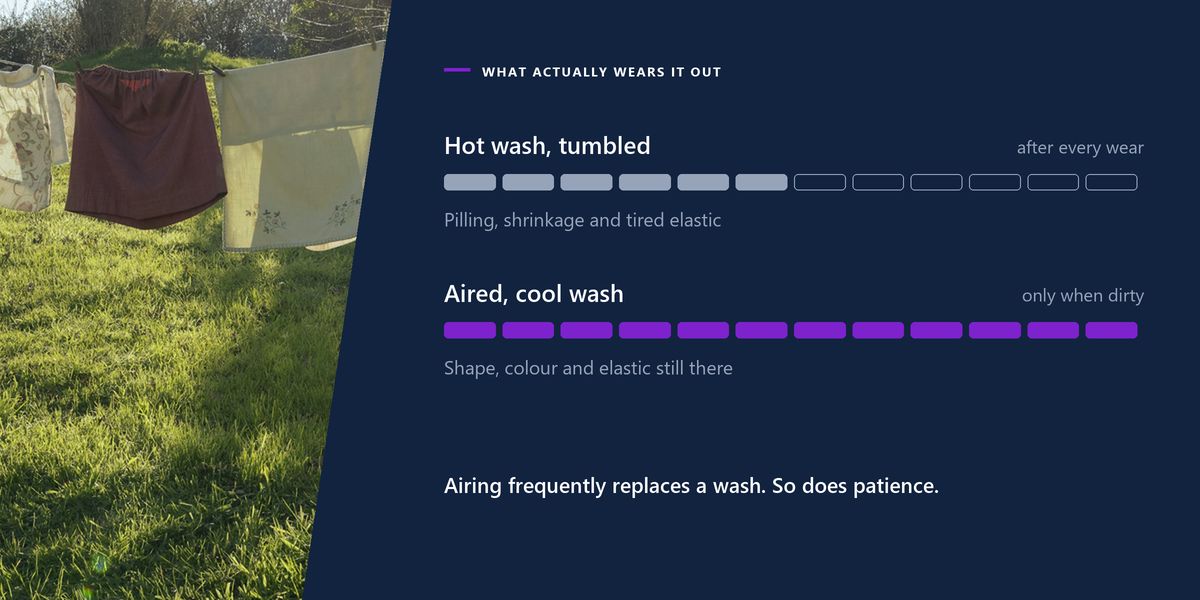
Wash less often and at lower temperatures, air dry rather than tumble dry, repair small damage immediately, store knitwear folded rather than hung, and rotate shoes so each pair has time to dry out and recover shape.
Sign in to join the conversation.
Loading responses…
Have a story, idea, or something valuable to share? Join The Blog Story for free, publish your content, reach more readers, and earn a share of advertising revenue from eligible content.
Create quality content. Grow your audience. Grow your earning potential.